


Natural homemade deodorant can hide mild underarm odor for a few hours, but it is untested on young skin and often irritates it. Kids begin making adult-style sweat around age 8 or 9, when puberty switches on the apocrine glands. Most homemade recipes rely on baking soda and essential oils, the two ingredients most likely to cause a rash. This guide explains what homemade deodorant does, where it falls short, and what works better for kids and teens.
Does Natural Homemade Deodorant Work for Kids?
Natural homemade deodorant works partly for kids. It can mask mild odor for a short time, but results are inconsistent, and nobody has tested the mix on young skin.
Body odor is sweat plus skin bacteria, and a homemade blend usually tackles only one half of that. Cornstarch absorbs moisture but does nothing about bacteria. A drop of tea tree oil targets bacteria but does nothing about wetness. Store-bought formulas are checked for stability and irritation. A kitchen mix is not.
Deodorant and antiperspirant also do different jobs. Deodorant controls odor, while antiperspirant blocks sweat with aluminum salts. Kids do not need to stop sweating, so odor control is the right goal for natural deodorant for teens and tweens.
Homemade versions also fade fast. Even a good deodorant can stop working by afternoon, and a soft paste that melts and rubs off gives out sooner. Parents who want a natural deodorant that works usually want all-day results, and a tested formula wins there.
Puberty Skin Changes Behind Kids' Body Odor
Body odor starts when puberty hormones wake up the apocrine sweat glands in the underarms. These glands make thicker, oilier sweat than the glands that cool the body during play. Skin bacteria break that sweat down, and the smell is the result. Pediatricians say this often starts as early as age 8 or 9, and it is not a hygiene failure.
The hormone shift often begins before the smell does. Adrenarche is when the adrenal glands start releasing androgens, the hormones behind oily skin and body odor. It typically starts between ages 6 and 8, about two years before true puberty.
Underarm skin is also easy to upset. Shaving, sleeve friction, and a still-developing skin barrier all add irritation, and stress sweat adds more. The same hormone shift also drives oily skin and breakouts, which is why puberty skin changes tend to arrive as a package.
What Is in Homemade Deodorant and How Does It Affect Young Skin?
Most homemade deodorant recipes combine a handful of pantry ingredients, and each one behaves differently on young underarms.
|
Ingredient |
What it does |
Risk for young underarms |
|
Baking soda |
Raises skin pH so odor bacteria struggle |
Alkaline, with a pH around 9. Can cause burning, dryness, and dark patches after shaving |
|
Essential oils (tea tree, lavender, citrus) |
Add scent and claim antibacterial action |
Largely unregulated and a common allergy trigger. Citrus oils can react with sunlight |
|
Coconut oil |
Base that holds the mix together |
Melts at about 76°F, so it turns greasy, leaks, and stains clothes |
|
Arrowroot or cornstarch |
Absorbs moisture |
Soaks up sweat but has no odor control on its own |
|
Shea butter |
Softens and binds |
Adds no odor control |
|
Crystal or alum stone |
Slows odor bacteria |
Potassium alum is an aluminum salt, so it is not aluminum-free |
Baking soda is the biggest concern. Its alkalinity can strip the skin barrier, and shaving makes the reaction worse, which is why baking soda in deodorant is a common cause of underarm rashes in kids. Essential oils are strong plant extracts that can trigger irritant or allergic reactions, and because they are largely unregulated, safety is hard to judge. Even tea tree, the most popular essential oil for deodorant, is not a safe default for a child.
Can You Make Natural Deodorant for Your Child at Home?
You can, but treat it as a short trial rather than a routine. Homemade deodorant for sensitive skin is a contradiction, because the ingredients most recipes rely on are the ones sensitive skin reacts to. If you still want to try a DIY deodorant, keep these guardrails in place:
-
Patch test on the inner forearm for two days before using it under the arms.
-
Leave out baking soda and essential oils.
-
Make small batches and keep them out of hot backpacks.
-
Use clean hands or a clean tool, never fingers dipped into a shared jar.
-
Stop at the first sign of redness, itching, or burning.
-
Skip DIY altogether for eczema-prone kids, whose skin barrier reacts faster.
Homemade vs Natural Store-Bought vs Reset Mode
Natural on a label is not the same as tested on skin.
|
Homemade |
Natural store-bought |
Reset Mode |
|
|
Skin testing |
None |
Varies by brand |
HRIPT tested, NEA Seal of Acceptance |
|
Baking soda |
Usually yes |
Often yes |
No |
|
Aluminum |
Only in alum versions |
Varies |
No |
|
Fragrance |
Essential oils or none |
Essential oils or fragrance |
No synthetic fragrance |
|
Format |
Jar paste or stick |
Stick, paste, roll on or spray |
Refillable mist for ages 8+ |
What Makes a Natural Deodorant Safe for Kids?
A safe natural deodorant for kids, especially one for sensitive skin, checks these boxes:
-
NEA Seal of Acceptance: The National Eczema Association evaluates a formula for sensitive and eczema-prone skin.
-
HRIPT testing: Repeated patch testing shows the formula does not irritate over weeks of use.
-
Baking soda-free: A baking soda-free deodorant avoids the most common cause of rashes.
-
Aluminum-free: An aluminum-free deodorant for sensitive skin lets a child sweat normally.
-
Fragrance-free or no synthetic fragrance: A fragrance-free deodorant removes the top irritant.
Natural is a marketing word. Tested is a result. Natural and aluminum-free are also separate claims, so it helps to understand the difference between natural and aluminum-free deodorant before you buy, since a product can have one label without the other.
Natural Deodorant for Teens and Tweens by Age
The right formula stays the same as kids grow, but the reasons to start change.
Should a 14-Year-Old Wear Deodorant?
Yes, a 14-year-old should wear deodorant once odor shows up, and by 14 most teens are well into puberty. There is no fixed age, because the body sets the timing. A low-key chat works best, so talk to your child about puberty before odor becomes a school problem.
Best Natural Deodorant for Teenage Girls and Boys
Girls and boys need the same thing from a deodorant, because odor bacteria do not care about gender. The best deodorants for teens are chosen by how the skin reacts, not by the label on the box. Start with baking soda-free, aluminum-free, and fragrance-free, then check for testing. A good first deodorant for girls is the same formula a boy would use.
Deodorant for a 10-Year-Old
At 10, kids deodorant should be gentle, not strong, whether it is deodorant for a 10-year-old boy or a 10-year-old girl. The best deodorant for tweens skips aluminum, baking soda, and heavy scent, and a gentle deodorant for tweens should be quick to apply so it actually gets used.
What Else Helps With Body Odor Besides Deodorant?
Daily washing and dry, breathable clothes solve more odor than any deodorant alternative does. Odor comes from bacteria, not dirt.
-
Wash the underarms with soap and water every day.
-
Shower daily or every other day once odor starts, and after sports.
-
Dry the underarms fully before dressing.
-
Choose cotton or other breathable fabrics and change shirts and socks daily.
These daily hygiene habits for kids do most of the heavy lifting. To kill armpit odor fast midday, wash or wipe the underarms and change into a fresh shirt. The best substitute for deodorant is a clean, dry underarm, but it will not last through a full practice. A DIY deodorant for smelly armpits rarely beats what soap and dry skin already do faster.
Why Reset Mode Suits a First Deodorant
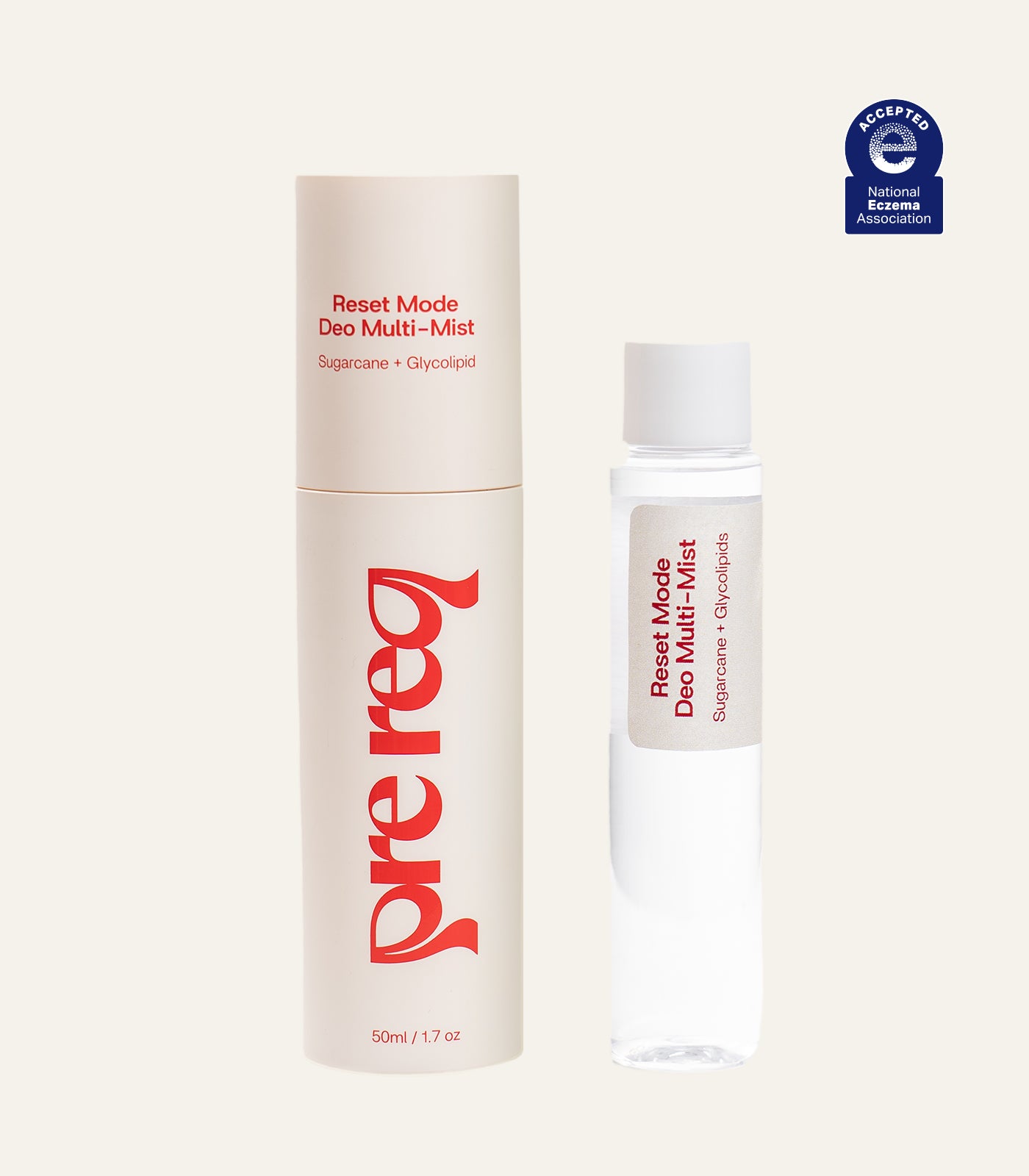
Reset Mode fits a first deodorant because it skips what makes homemade and adult formulas risky. It is a refillable deodorizing mist for ages 8 and up, built for backpacks, not bathrooms. It is aluminum-free, baking soda-free, and made without synthetic fragrance. Sugarcane fermentation neutralizes odor at the source, and glycolipids support the skin's microbiome. It also carries the NEA Seal of Acceptance.
Dr. Tiffany Libby, a board-certified dermatologist and Prereq's strategic advisor, puts the standard plainly:
"Safety is our first prerequisite. Our formulas are free from aluminum, parabens, alcohol, baking soda, and synthetic fragrances."
A mist also avoids the jar problem, with no paste to dip into and no stick to melt in a bag.
Recommended Products for Tweens & Teens
Support healthy hygiene and skincare habits with gentle, age-appropriate essentials designed for pre-teens and teens.
When Does a Rash or Heavy Sweating Need a Doctor?
A deodorant rash needs the product stopped first. Rinse with lukewarm water, pat dry, and use a fragrance-free moisturizer until the skin settles. See a doctor if the rash blisters, hurts, or keeps spreading.
Constant, drenching sweat is a separate issue from odor. Excessive sweating in kids is worth raising with a pediatrician, and the American Academy of Pediatrics advises the same when sweating affects a child's mood or friendships.
Natural Deodorant for Kids Works Best When It Is Tested and Simple
Natural homemade deodorant can mask mild odor, but it cannot match a tested formula for safety or staying power. Kids do best with clean skin, dry clothes, and one gentle, aluminum-free product. Prereq's collection is built around that idea, with tested basics made for tween and teen skin.
Frequently Asked Questions
At what age should kids start wearing deodorant?
There's no fixed age. Most kids need it once body odor shows up, which often starts around age 8 or 9 when puberty activates the apocrine sweat glands. Odor is a normal sign of development, not a hygiene failure, so let the body set the timing.
Is baking soda deodorant safe for kids?
It's not the best choice. Baking soda has a pH of around 9, which can strip the skin barrier and cause burning, dryness, and rashes. Shaving makes the reaction worse. A baking soda-free formula avoids the most common cause of underarm irritation in kids.
Do kids need antiperspirant or deodorant?
Deodorant is usually enough. Deodorant controls odor, while antiperspirant blocks sweat with aluminum salts. Kids don't need to stop sweating, so an aluminum-free deodorant that targets odor is the better fit for young skin.
How do I know if my child is reacting to their deodorant?
Look for redness, itching, burning, or dry patches under the arms. Stop using the product, rinse with lukewarm water, pat dry, and apply a fragrance-free moisturizer until the skin settles. See a doctor if the rash blisters, hurts, or keeps spreading.
What should I look for in a first deodorant for my tween?
Choose a formula that is aluminum-free, baking soda-free, and free of synthetic fragrance. Look for proof of testing, such as the National Eczema Association Seal of Acceptance and HRIPT testing, rather than relying on the word "natural." An easy-to-apply format helps it get used. Reset Mode, a refillable mist for ages 8 and up, meets these criteria.
Recommended Products for Tweens & Teens
Support healthy hygiene and skincare habits with gentle, age-appropriate essentials designed for pre-teens and teens.

