


October is Eczema Awareness Month, a campaign led by the National Eczema Association (NEA) since 1988 to educate the public about eczema and reduce its stigma. For parents, it's a good moment to look past symptom management and actually identify what's triggering their child's flares. Eczema affects roughly 1 in 9 children in the U.S., making it one of the most common chronic skin conditions in kids, right alongside asthma and seasonal allergies, which often run in the same families.
This guide breaks down what parents actually need to know: why kids get eczema in the first place, the triggers that are often missed at home, and a simple daily routine that protects a compromised skin barrier without turning it into a second job.
What Is Eczema Awareness Month?
Eczema Awareness Month happens every October and is organized primarily by the National Eczema Association, with the Asthma and Allergy Foundation of America (AAFA), the American Academy of Dermatology (AAD), and other health organizations joining in. The goal is straightforward: increase public understanding of eczema, dispel the "it's just dry skin" myth, and connect people with accurate treatment information.
NEA's 2025 campaign, #UnhideEczema, focused on visibility, encouraging people living with eczema to share their real experiences instead of hiding flares under long sleeves or makeup. You may also see the term National Eczema Week used in some regions and by some organizations, though in the U.S. the observance runs the full month rather than a single week.
For families, National Eczema Awareness Month is less about ribbons and hashtags and more about a reason to revisit the basics: is your child's routine still working, and are there triggers you haven't identified yet?
Why Are Kids More Prone to Eczema?
Children get eczema more often than adults because their skin barrier is still developing and, in many cases, genetically predisposed to leak moisture and let irritants in. The most common form, atopic dermatitis, is linked to a mutation in the gene that produces filaggrin, a protein responsible for holding the skin's outer layer together. Without enough of it, the skin behaves like a wall with gaps in the mortar: moisture escapes, and allergens, bacteria, and irritants get in more easily than they would on typical skin.
This is also why eczema rarely shows up alone. Kids with eczema are significantly more likely to have a family history of asthma or hay fever, since all three conditions share the same underlying "atopic" tendency toward an overactive immune response to environmental triggers. According to AAFA, close to 8 million children in the U.S. currently have some form of eczema, about 1 in 9. Most cases start before age 5, though the condition can appear, disappear, and reappear at very different points across childhood and adolescence.
The 3-Minute Rule: A Barrier-First Daily Routine
Dermatologists commonly recommend what's known as the 3-minute rule for eczema-prone skin: apply a thick moisturizer within three minutes of getting out of the bath or shower, while the skin is still damp. That short window matters because damp skin absorbs and locks in moisture far better than skin that's already air-dried.
A few specifics worth following consistently:
-
Keep baths lukewarm and short: Five to ten minutes in hot water strips natural oils and worsens dryness. Skip bubble baths entirely, since the surfactants in them are a common irritant.
-
Pat, don't rub: Gently pat skin with a towel and leave it slightly damp before moisturizing.
-
Choose ointments over lotions: Thick, fragrance-free creams and ointments outperform thin, pumpable lotions for eczema-prone skin, since lotions contain more water and alcohol, which can sting or dry out already-compromised skin.
This routine is sometimes described alongside the "soak and seal" method: a short lukewarm soak, followed immediately by sealing in moisture. It's one of the few pieces of eczema advice with genuinely consistent support across pediatric dermatology sources, and it costs nothing beyond a good moisturizer.
Common Eczema Triggers Parents Overlook
Most parents know to watch for obvious irritants like scented lotion, but several everyday triggers are easy to miss.
Laundry detergent residue
It is one of the biggest. Fragrance and preservatives in regular detergents and fabric softeners can sit against a child's skin for hours after washing, and the rash that results often gets blamed on a new soap or deodorant when the actual culprit is the shirt. Switching to a fragrance-free, dye-free detergent and running an extra rinse cycle removes far more residue than most families expect.
Fabric choice
It matters just as much. Polyester, nylon, and rough wool blends trap heat and create friction against sensitive skin, while soft, breathable cotton lets skin regulate temperature and stays gentler during a flare.
Overheating and sweat
They are a major, underrated trigger. Sweat is mildly acidic, and on skin with a weakened barrier, prolonged exposure strips away what little protection remains, which is part of why eczema often gets worse in summer, after sports, or during a fever. Occasionally, what looks like an eczema flare from sweating is actually excessive sweating on its own; if a child seems to sweat far more than their siblings or peers even at rest, it's worth ruling out hyperhidrosis before assuming it's purely an eczema trigger.
Personal-care ingredients
Fragrance (listed as "fragrance" or "parfum"), dyes, harsh sulfates, and alcohol are the most consistent offenders in skincare and body products, and this holds regardless of where on the body the reaction shows up. Eczema that shows up under the arms is one of the most common patterns in children, largely because that skin is thin, warm, and in constant contact with ingredients like synthetic fragrance and baking soda, both frequent triggers once kids start using deodorant around puberty.
Will My Child Outgrow Eczema?
For many kids, eczema genuinely improves by age 5 or 6, and a meaningful number essentially grow out of it entirely. But that's not universal. Some children see symptoms return during puberty, right around the same time hormonal shifts change their skin barrier, sebum production, and sweat patterns, which is also roughly when kids need their first deodorant. Others carry a milder version of eczema into adulthood, often confined to specific areas like the hands, eyelids, or the bends of the elbows and knees.
There's no reliable way to predict which path a specific child will take. Family history is the closest thing to a signal: kids with a parent or sibling who had eczema into adulthood are somewhat more likely to see it persist. The practical takeaway for parents is to keep the barrier-first routine going even during calm stretches, since a strong skin barrier reduces the severity of flares whether or not the eczema eventually resolves on its own.
Eczema and Diet: What Parents Should Know
Food is rarely a direct cause of eczema, but for a subset of kids, particularly those with IgE-mediated food allergies, it can aggravate an existing flare. The most common allergens linked to eczema flares are milk, egg, soy, wheat, peanut, tree nuts, fish, and shellfish.
It's worth noting that the relationship often runs the opposite direction from what parents assume: an active eczema flare can make a child's skin barrier more reactive to food allergens, rather than food being the original trigger. Because of that, elimination diets should always be supervised by a pediatrician or allergist rather than attempted independently. Removing entire food groups without medical guidance risks nutritional gaps in a growing child without necessarily improving the skin.
Building a Gentle, Eczema-Safe Routine for Tweens & Teens
Once kids reach the tween and teen years, they're usually ready to take on more of their own skincare, and that's exactly when routines need to get simpler, not more complicated. A short, fragrance-free routine is easier for a child to actually stick with than an elaborate one, and consistency matters more than product count for eczema-prone skin.
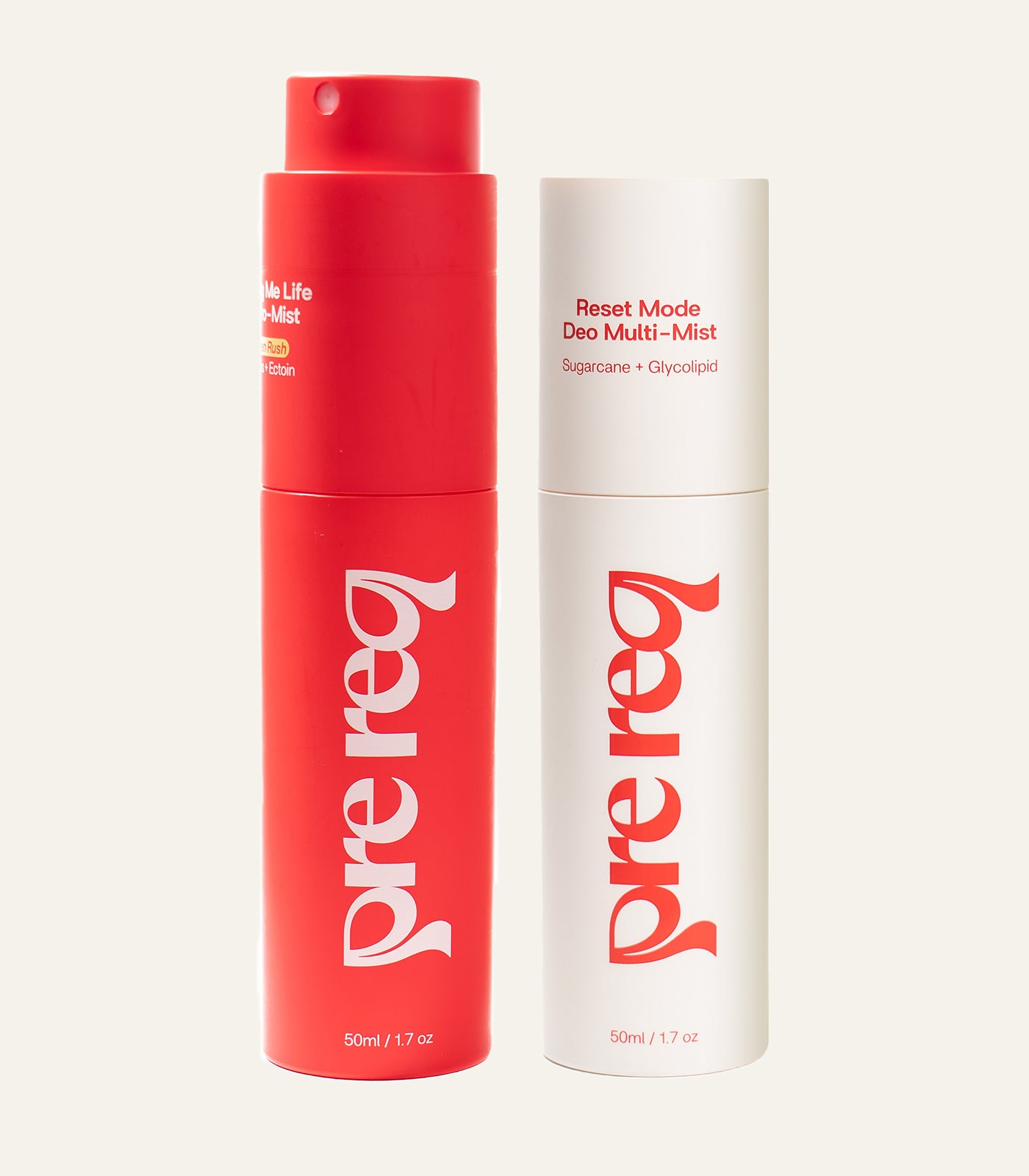
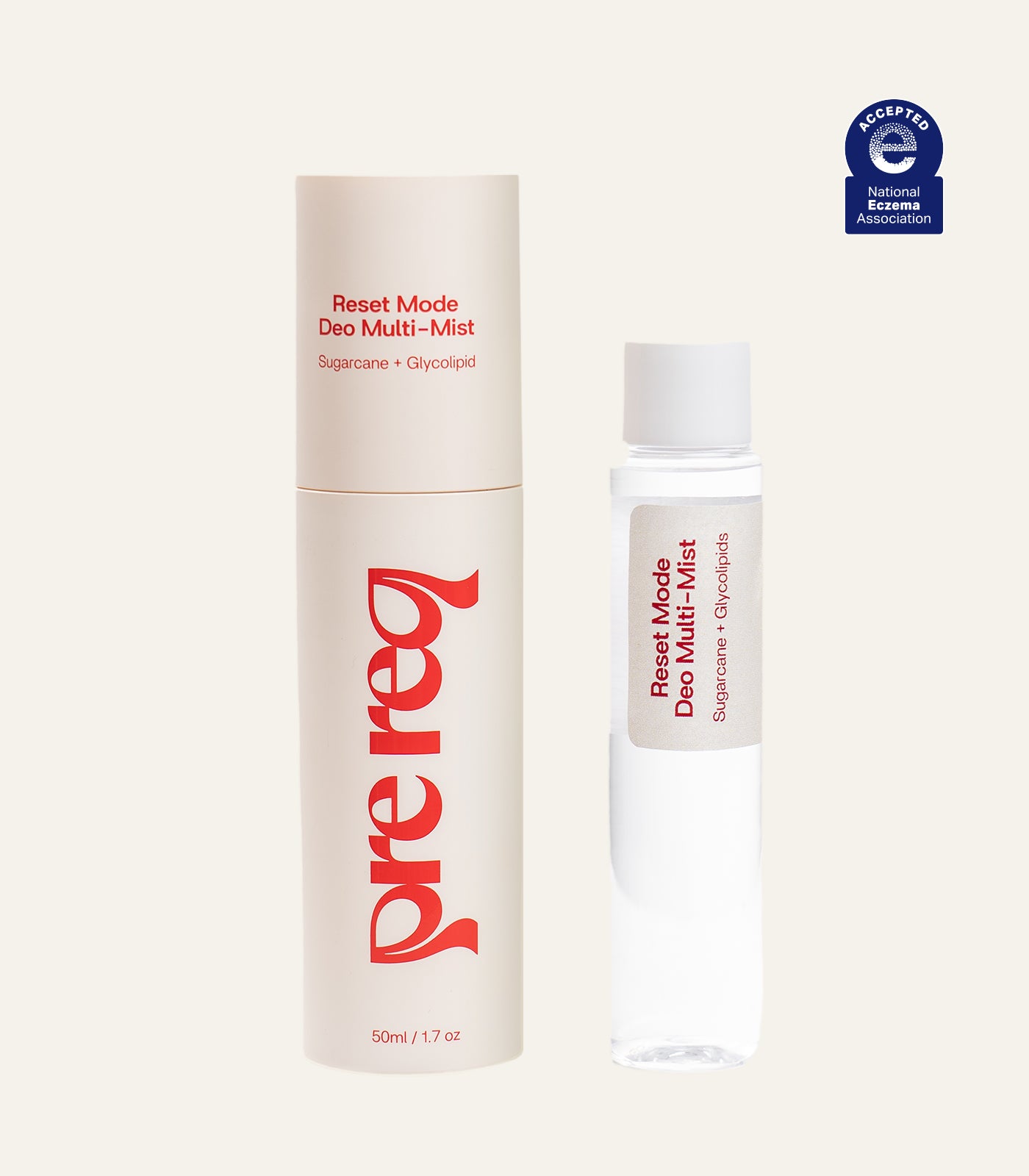
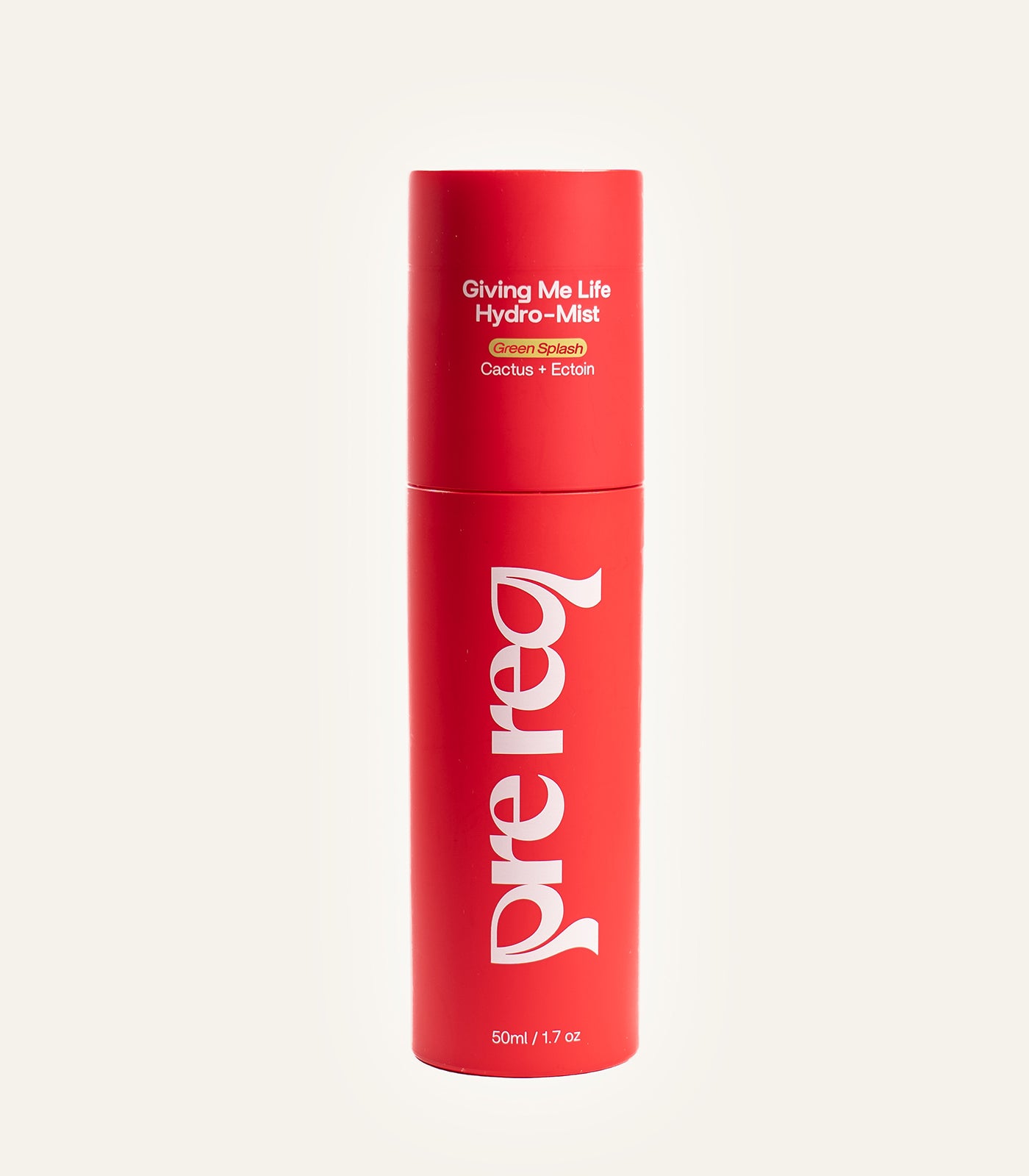
For the underarm area specifically, choosing an eczema-safe deodorant makes a real difference during puberty, when apocrine sweat glands activate for the first time, and deodorant enters the routine. Prereq's Reset Mode Deo Multi-Mist uses magnesium hydroxide instead of baking soda or aluminum salts, and its mist format avoids the friction of a roll-on or stick, which matters on skin that's already irritated. For hydration, a lightweight option like the Giving Me Life Hydro-Mist can help without adding heavy, pore-clogging ingredients.
The broader goal is building a simple, age-appropriate routine that a tween can manage with some supervision: cleanse, moisturize, protect, rather than a routine designed for adult skin and scaled down.
Recommended Products for Tweens & Teens
Support healthy hygiene and skincare habits with gentle, age-appropriate essentials designed for pre-teens and teens.
How Families Can Support Eczema Awareness Month
Supporting Eczema Awareness Month doesn't require fundraising or events. A few low-effort actions make a real difference:
-
Share accurate information instead of anecdotal "cures" that circulate on social media
-
Use the hashtag #UnhideEczema if your family wants to share your own experience
-
Check the NEA's Seal of Acceptance product directory when trying a new skincare or laundry product
-
Talk to your child about their eczema in a matter-of-fact way, so it doesn't become a source of shame or something to hide from friends
That last point matters more than it might seem. Visible eczema can affect a child's confidence, especially once they're old enough to notice classmates staring or asking questions, and normalizing the conversation at home goes a long way.
When to See a Dermatologist
Most eczema flares respond to consistent home care, but certain signs mean it's time to bring in a professional rather than continuing to manage things alone:
-
The rash hasn't improved after two weeks of consistent moisturizing and trigger avoidance
-
You notice honey-colored crusting, yellow weeping, or increased warmth around the affected skin, all signs of a possible bacterial infection
-
Itching is disrupting your child's sleep regularly
-
The eczema is widespread, or a fever accompanies the flare
A pediatric dermatologist can also perform patch testing to identify a specific contact allergen, which often shortens months of trial and error with different products.
Frequently Asked Questions
1. What is the purpose of Eczema Awareness Month?
Eczema Awareness Month, observed every October, exists to educate the public about eczema, correct common misconceptions, and reduce the stigma around visible skin symptoms, while also raising support for continued research into treatment.
2. Why are kids more prone to eczema than adults?
Children's skin barriers are still developing and are often genetically predisposed to let moisture out and irritants in, largely due to reduced filaggrin protein. This makes kids more reactive to everyday triggers that adult skin tolerates fine.
3. What are the most common eczema triggers in kids?
Fragranced laundry detergent, synthetic fabrics, overheating and sweat, and fragranced personal-care products are the most consistent triggers parents encounter, alongside genetic predisposition that can't be controlled through routine alone.
4. Is there an official eczema awareness ribbon color?
Not in the way some other conditions have one. Eczema doesn't have a single, universally recognized awareness ribbon color the way pink represents breast cancer. NEA's own October campaign materials use blue and white branding rather than a standardized ribbon.
5. What foods should a child with eczema avoid?
Food is rarely a direct cause, but for kids with diagnosed IgE-mediated allergies, milk, egg, soy, wheat, peanut, tree nuts, fish, and shellfish are the most common flare-aggravating allergens. Any elimination diet should be guided by a pediatrician or allergist.
6. Can eczema be completely cured?
There's currently no cure, but the large majority of cases are very manageable with consistent moisturizing, trigger avoidance, and, when needed, prescribed topical treatment. Many children see significant improvement by age 5 or 6.
7. How can I find local eczema support resources for my family?
The National Eczema Association's website lists patient resources, webinars, and community programs, and AAFA offers similar support specifically around eczema's overlap with asthma and allergies. A pediatric dermatologist or allergist can also point you toward local specialists and support groups.
What This Means for Your Family
Eczema Awareness Month is a useful nudge, not a one-time event. The families who manage it best usually aren't doing anything dramatic: a barrier-first bathing routine, a few trigger swaps in the laundry room, and a simple, fragrance-free skincare and deodorant routine their kid can actually stick with. None of that erases eczema, but it consistently reduces how often it flares and how much it affects daily life, which, for most families, is the whole point of paying closer attention this October.
If you're rebuilding your child's routine around fewer, gentler ingredients, Prereq's sensitive-skin lineup is built specifically for eczema-prone tween and teen skin, fragrance-free, aluminum-free, and formulated for the skin your kid actually has.
Recommended Products for Tweens & Teens
Support healthy hygiene and skincare habits with gentle, age-appropriate essentials designed for pre-teens and teens.
References:
This article is for general educational purposes only and is not a substitute for professional medical advice, diagnosis, or treatment. Always consult a pediatrician, dermatologist, or allergist about your child's specific skin condition before starting any new product, routine, or elimination diet.

