


The right skincare for kids by age is simple: sunscreen and gentle cleansing from age 7; a moisturizer added around ages 8 to 10, when puberty begins; and an optional gentle spot treatment from ages 11 to 12 for breakouts. What a child's skin actually needs depends entirely on where they are in development, not on what's trending on social media or what adult products happen to be in the bathroom cabinet.
Most skincare products on store shelves are formulated for adult skin. Using them on a child at the wrong developmental stage can cause dryness, irritation, and breakouts, the exact problems parents are trying to prevent. This guide maps out what is appropriate and what to skip at every stage, from age 7 through 12.
Skincare for Kids by Age: A Stage-by-Stage Guide
The stages below are organized by what is biologically happening at each age, not by what's being marketed to kids or their parents. Each stage lists what is appropriate, what to add as the skin changes, and what to skip entirely.
Skin Care for 7-Year-Olds
At 7, most children are fully pre-pubescent. The skin is balanced, not yet producing excess oil, and does not require a skincare routine beyond basic hygiene and sun protection.
What is appropriate at 7:
-
Water or a very gentle, fragrance-free cleanser after outdoor play, not daily face washing
-
A lightweight moisturizer only if the skin is visibly dry or the climate is cold and dry
-
Mineral SPF 30+ with zinc oxide every morning, this is the one non-negotiable at every age
What to skip: toners, serums, exfoliants, and anything labeled brightening, firming, or anti-aging. The skin at this age is not producing excess oil and has no concerns that require correction.
If your 7-year-old has eczema, persistent dryness, or a diagnosed skin condition, follow the guidance of a pediatric dermatologist rather than a general routine.
Skin Care for 8 Year Olds and 9 Year Olds
Ages 8 and 9 mark the beginning of puberty for many kids, particularly girls. Some children this age start to notice slightly shinier skin around the nose and forehead. This is the right time to introduce a simple two-step daily routine.
What is appropriate at 8-9:
|
Step |
Product type |
When |
|
Cleanse |
Gentle fragrance-free foaming cleanser |
PM only |
|
Protect |
Mineral SPF 30+ with zinc oxide |
AM only |
A lightweight moisturizer is worth adding if cleansing leaves skin feeling tight or if visible dryness appears. Most 8-9-year-olds with normal to slightly oily skin don't need it yet.
For girls in particular, puberty can begin as early as 8, so paying attention to skin texture changes around the nose is a useful signal that the body is shifting.
What to skip at 8-9: niacinamide serums, AHAs, retinol, and toners. None of these is appropriate until the skin needs active correction, which is not typical at this stage.
Skin Care for 10-Year-Olds
By 10, puberty is well underway for most girls and beginning for many boys. Increased sebaceous gland activity means oil production becomes noticeable, and the first blackheads or clogged pores may appear. This is the stage where a daily moisturizer makes a real difference.
What is appropriate at 10:
-
Gentle fragrance-free cleanser, PM daily; AM if skin is visibly oily by morning
-
Lightweight non-comedogenic moisturizer, AM and PM
-
Mineral SPF 30+, every morning
For girls at this age, look for moisturizers with ceramides or hyaluronic acid. These support the skin barrier without adding oil or clogging pores. Avoid heavyweight formulas with butters or plant oils that can sit on the surface and block pores on already-oily skin. If you're not sure which specific products fit these criteria, the best skin care products for 10-year-olds break down dermatologist-approved options for this age.
What to skip at 10: exfoliating acids, retinol, benzoyl peroxide, and multi-step serums. Early oiliness does not require active ingredients; it requires a consistent, simple barrier-first routine used daily.
Skincare for 11-Year-Olds
Age 11 is the peak of the early tween skin transition for most kids. Hormonal fluctuations are more pronounced, oil production is higher, and actual breakouts, not just occasional pimples, are common. Social media exposure to adult skincare products is also at its peak at this age, making ingredient education especially important for parents.
What is appropriate at 11:
-
Gentle fragrance-free foaming cleanser PM daily
-
Lightweight non-comedogenic moisturizer AM and PM
-
Mineral SPF 30+ every morning
-
Optional: a hypochlorous acid (HOCl) spray applied after cleansing if breakouts are frequent. HOCl is naturally antimicrobial and anti-inflammatory, and significantly gentler than salicylic acid or benzoyl peroxide products formulated for older skin
What to skip at 11: retinol, AHAs, benzoyl peroxide, and any product marketed as anti-aging, brightening, or firming. These signals that the formula is built for adult skin concerns, not for skin that is still developing its barrier and microbiome.
For a full breakdown of which ingredients are safe at this stage and which aren't, the ingredients explained page covers every compound Prereq uses and why.
Skincare for 12-Year-Olds
At 12, the three-step foundation from earlier stages still applies. What changes is that breakouts may be more frequent and more visible, and some kids will benefit from a low-concentration niacinamide serum to help regulate oil and reduce redness.
What is appropriate at 12:
-
Gentle fragrance-free cleanser PM
-
Lightweight non-comedogenic moisturizer, AM and PM
-
Mineral SPF 30+, AM
-
Optional: niacinamide serum at 2–5% concentration for persistent oiliness or redness
-
Optional: HOCl spot spray for active breakouts
Still off the table at 12: retinol, AHAs and BHAs at clinical concentrations, benzoyl peroxide, and any product formulated for adult anti-aging. The skin is still developing, and the barrier disruption these ingredients can cause at this age can make breakouts worse, not better.
What Are the Best Skincare Products for Kids?
Recommended Products for Tweens & Teens
Support healthy hygiene and skincare habits with gentle, age-appropriate essentials designed for pre-teens and teens.
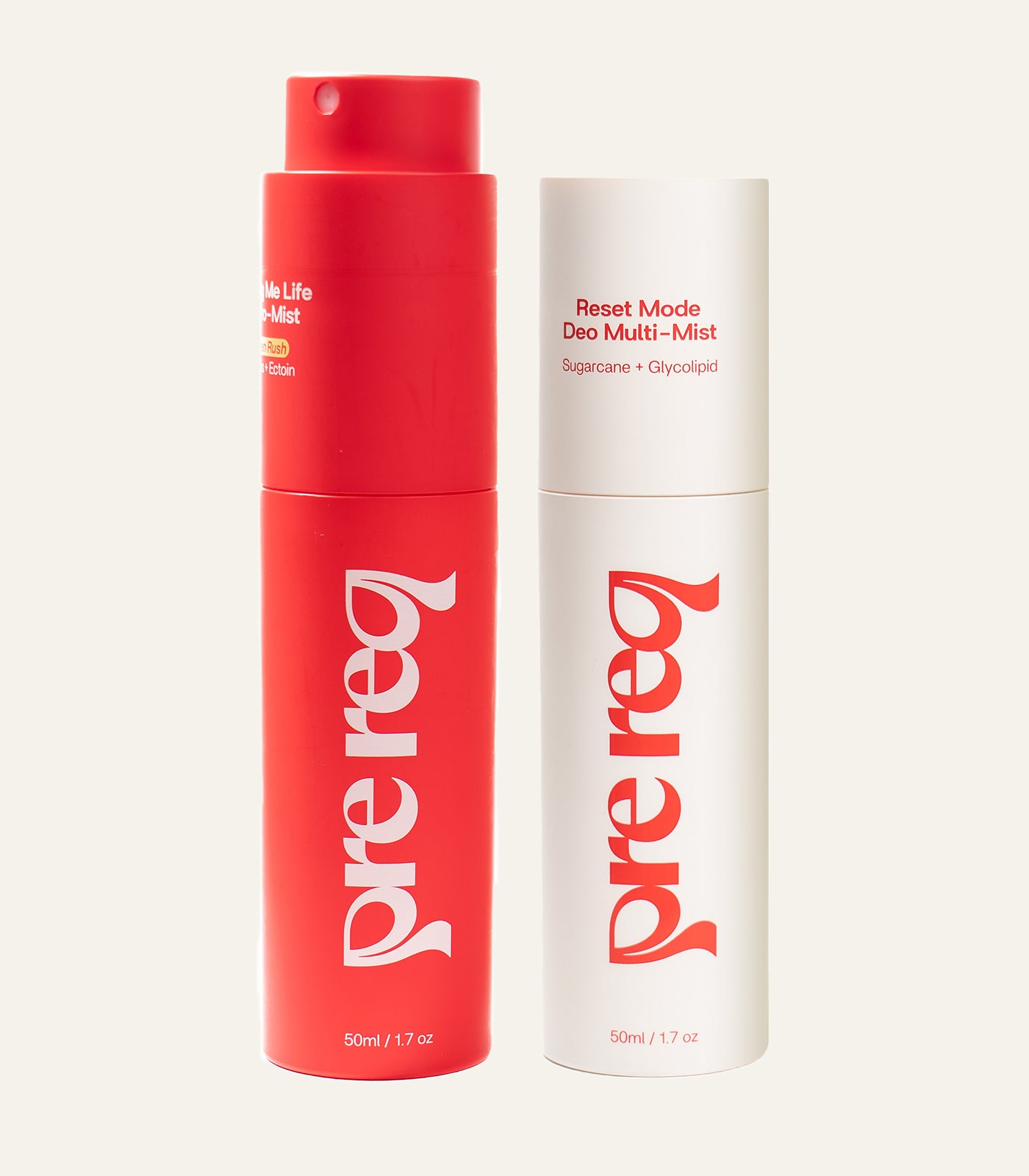
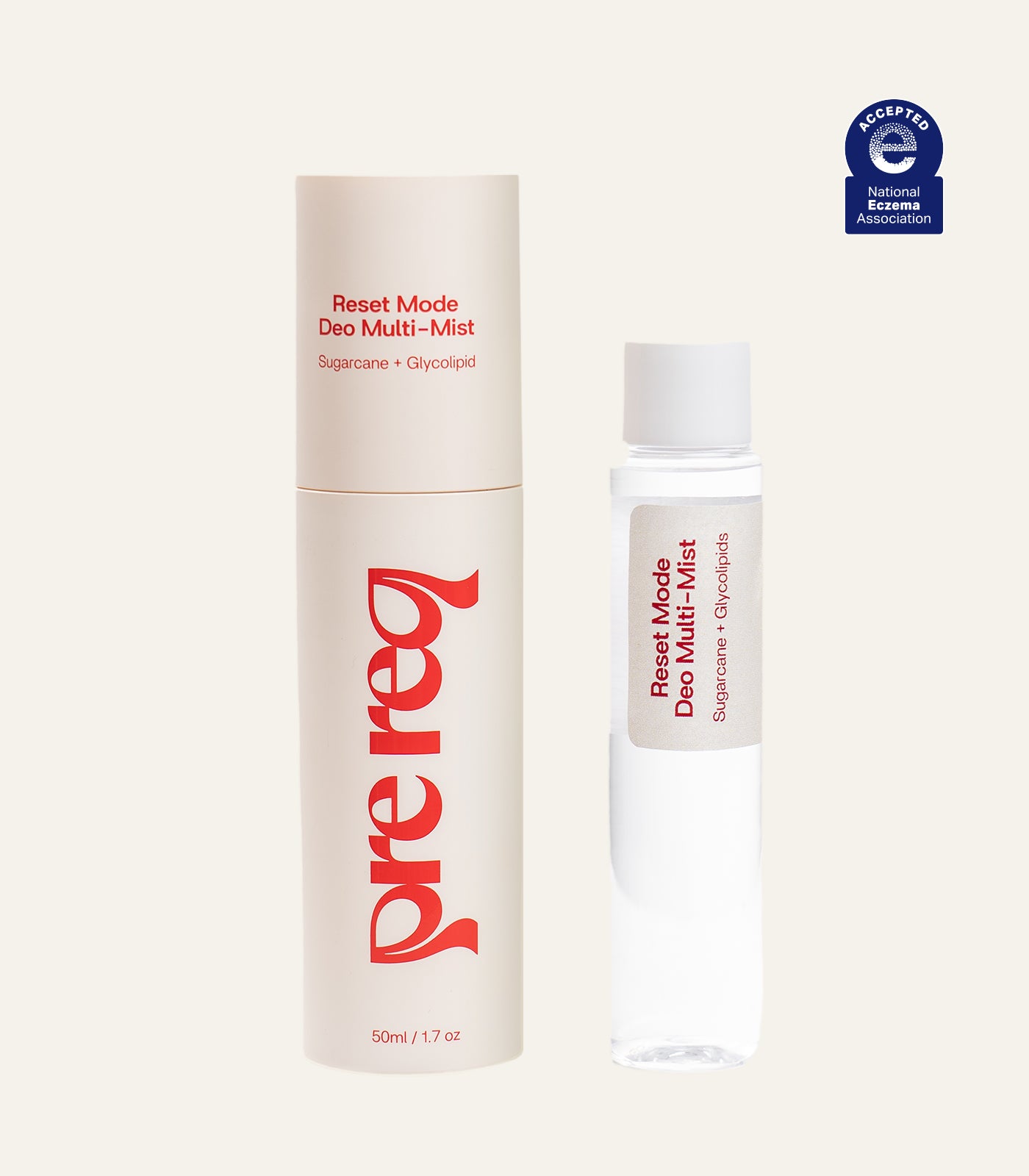
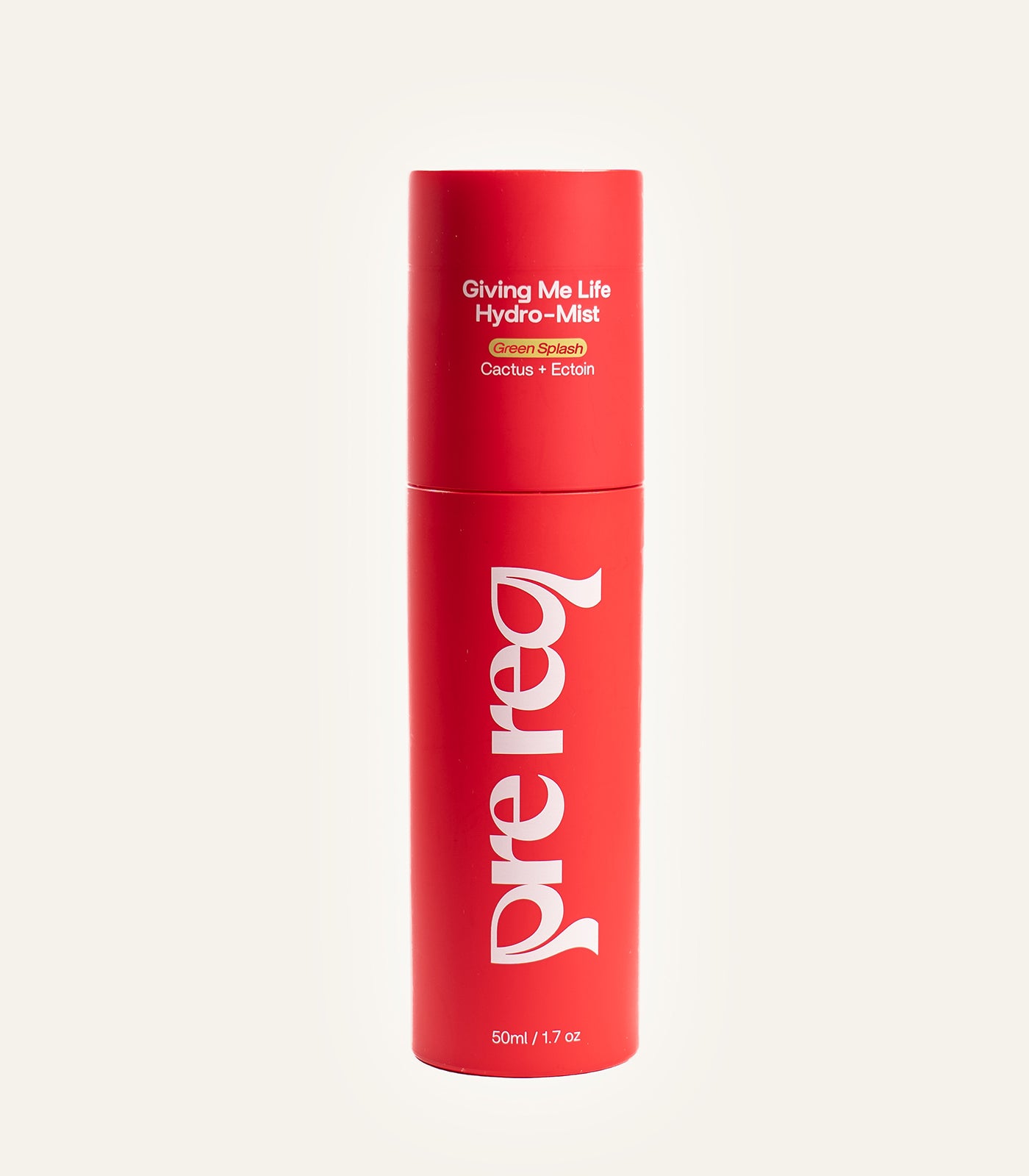
Good skincare for kids means formulated specifically for developing skin, not adult formulas repositioned with younger packaging. The clearest indicators of a genuinely kid-safe product are the NEA Seal of Acceptance, dermatologist-tested status, and an ingredient list free of synthetic fragrance, parabens, phthalates, retinol, and AHAs.
Prereq Care products appropriate for kids ages 8-12:
Giving Me Life Hydro-Mist
A portable, backpack-ready hydrating mist with hyaluronic acid, cactus extract, and barrier-supporting ectoin. Appropriate from age 8 onward. Works as a mid-day skin refresh, a post-sports reset, or a lightweight moisturizer step for younger kids who resist creams. Carries the NEA Seal of Acceptance.
Reset Mode Deo Multi-Mist
Aluminum-free, baking soda-free, paraben-free deodorant mist co-created with real pre-teens. Works on underarms, feet, and anywhere that needs a reset. Appropriate from the first signs of body odor, which typically appear between the ages of 8 and 10. Also carries the NEA Seal of Acceptance.
Ingredients to Look For (and Avoid) in Kid Skincare
Ingredient lists matter more than brand names at this age. Here is a quick reference for what is safe and what to skip.
Safe for kids ages 7-12:
|
Ingredient |
What it does |
|
Ceramides |
Repairs and strengthens the skin barrier |
|
Hyaluronic acid |
Hydrates without clogging pores |
|
Niacinamide (2–5%) |
Reduces redness, controls oil, appropriate for ages 11-12 |
|
Zinc oxide |
Mineral UV protection; sits on the skin surface rather than absorbing |
|
Ectoin |
Stabilizes the skin microbiome and soothes sensitivity |
|
Aloe vera |
Calms irritation and redness |
Avoid for ages 7-12:
|
Ingredient |
Why |
|
Retinol/retinoids |
Too aggressive for a developing skin barrier |
|
AHAs (glycolic, lactic acid) |
Unnecessary at this age; thins the barrier over time |
|
Benzoyl peroxide |
Very drying; disrupts the developing skin barrier |
|
Synthetic fragrance |
Leading cause of contact irritation and sensitivity in kids |
|
Parabens/phthalates |
Preservatives and fragrance carriers with endocrine-disrupting potential |
|
Baking soda |
Alkaline enough to cause rashes on sensitive or reactive skin |
For parents looking for a complete first routine, the best tween skincare gift kits guide walks through exactly what to include at each stage.
Common Questions About Skincare for Kids by Age
At what age should a kid start skincare?
Kids should start skincare between ages 7 and 8, beginning with a gentle fragrance-free cleanser and a mineral SPF 30+. A moisturizer should be added between the ages of 8 and 10, when puberty begins and oil production increases. By ages 11 to 12, a full three-step routine cleanser, moisturizer, and SPF is appropriate, with optional gentle add-ons for breakouts only if needed.
What should a 10-year-old use for skincare?
A 10-year-old's routine should include a gentle fragrance-free cleanser in the evening, a lightweight non-comedogenic moisturizer morning and night, and a mineral SPF 30+ every morning. Active ingredients such as retinol, AHAs, and benzoyl peroxide are not appropriate for this age.
Should a 7-year-old have skincare?
A full skincare routine is not necessary at 7. Daily sunscreen and a gentle rinse after outdoor play are enough. The skin at this age is not yet producing excess oil and does not need active correction.
What is a good skincare routine for a 9-year-old girl?
For a 9-year-old girl showing early signs of puberty: a gentle fragrance-free cleanser in the evening and a mineral SPF 30 every morning. Add a lightweight moisturizer if skin feels tight or dry after cleansing. Skip everything else.
Is skincare safe for kids?
Yes, when products are specifically formulated for young skin. Kid-safe skincare avoids harsh activities, synthetic fragrance, parabens, and adult anti-aging ingredients. Look for NEA-approved or dermatologist-tested formulas designed for ages 8–12.
Can kids use niacinamide?
Niacinamide becomes appropriate around age 11 or 12, at a low 2–5% concentration, to help with oil control and redness. It's not necessary or recommended before puberty-related oiliness begins, typically around age 10.
What skincare should an 11-year-old use?
An 11-year-old's routine should include a gentle fragrance-free cleanser in the evening, a lightweight non-comedogenic moisturizer morning and night, and mineral SPF 30+ every morning. An optional HOCl spray can help with frequent breakouts. Retinol, AHAs, and benzoyl peroxide are not appropriate at this age.
The Simple Rule That Applies at Every Age
The right skincare for kids at every age is always the simplest version that addresses what the skin actually needs. At 7, that is sunscreen. At 9, it is sunscreen and a cleanser. At 11 or 12, it is a three-step routine: cleanser, moisturizer, SPF, with optional gentle add-ons for breakouts only when needed. No 10-step routines. No adult activities. Just age-appropriate products used consistently.
Every Prereq Care product is formulated specifically for skin ages 8-12 and is free from retinols, synthetic fragrance, parabens, and any ingredients their skin is not ready for. Shop the full collection or explore the full ingredient list to see exactly what goes into every formula.

