


Most skincare products are not made for 10-year-old skin.
At 10, skin is changing, oil production increases, sweat glands become more active, and early breakouts can begin. It's also more absorbent than adult skin, meaning the wrong ingredients don't just sit on the surface. They go in. That's why ingredient safety at this age isn't optional; it's the entire point.
This list covers ten skincare products that are actually built for this age, not adult formulas repackaged with younger-looking labels.
Every pick is ingredient-verified, age-appropriate, and chosen specifically for skin that is still developing. No unnecessary steps, no harmful actives, no guesswork.
Ingredients That Are Safe for 10-Year-Old Skskincare routine for 12 year oldsin
Age-appropriate and beneficial:
-
Glycerin draws moisture into the skin and holds it there
-
Sodium Hyaluronate, a lightweight form of hyaluronic acid, hydrates without heaviness
-
Ectoin is a naturally occurring molecule that protects the skin barrier from environmental stressors, including pollution and blue light from screens
-
Zinc oxide is the standard in mineral sunscreens; safe for all ages and sensitive skin
-
Aloe vera, cucumber extract, cactus extract, soothing and anti-inflammatory
-
Glycolipids support the skin's natural microbiome
Ingredients to avoid at age 10:
-
Retinol/retinoids prescribed for adult anti-aging; too aggressive for developing skin
-
High-concentration salicylic acid or AHAs can damage the skin barrier in young skin
-
Benzoyl peroxide is appropriate only under a dermatologist's guidance at this age
-
Aluminum compounds found in antiperspirants; not appropriate for preteen skin
-
Parabens and phthalates linked to endocrine disruption during hormonal development
-
Synthetic fragrance a leading cause of contact dermatitis in children
Understanding what to look for and what to avoid is covered in more depth in this guide on how to buy safe skincare products for your kids.
Recommended Products for Tweens & Teens
Support healthy hygiene and skincare habits with gentle, age-appropriate essentials designed for pre-teens and teens.
10 Best Skincare Products for 10-Year-Olds in 2026
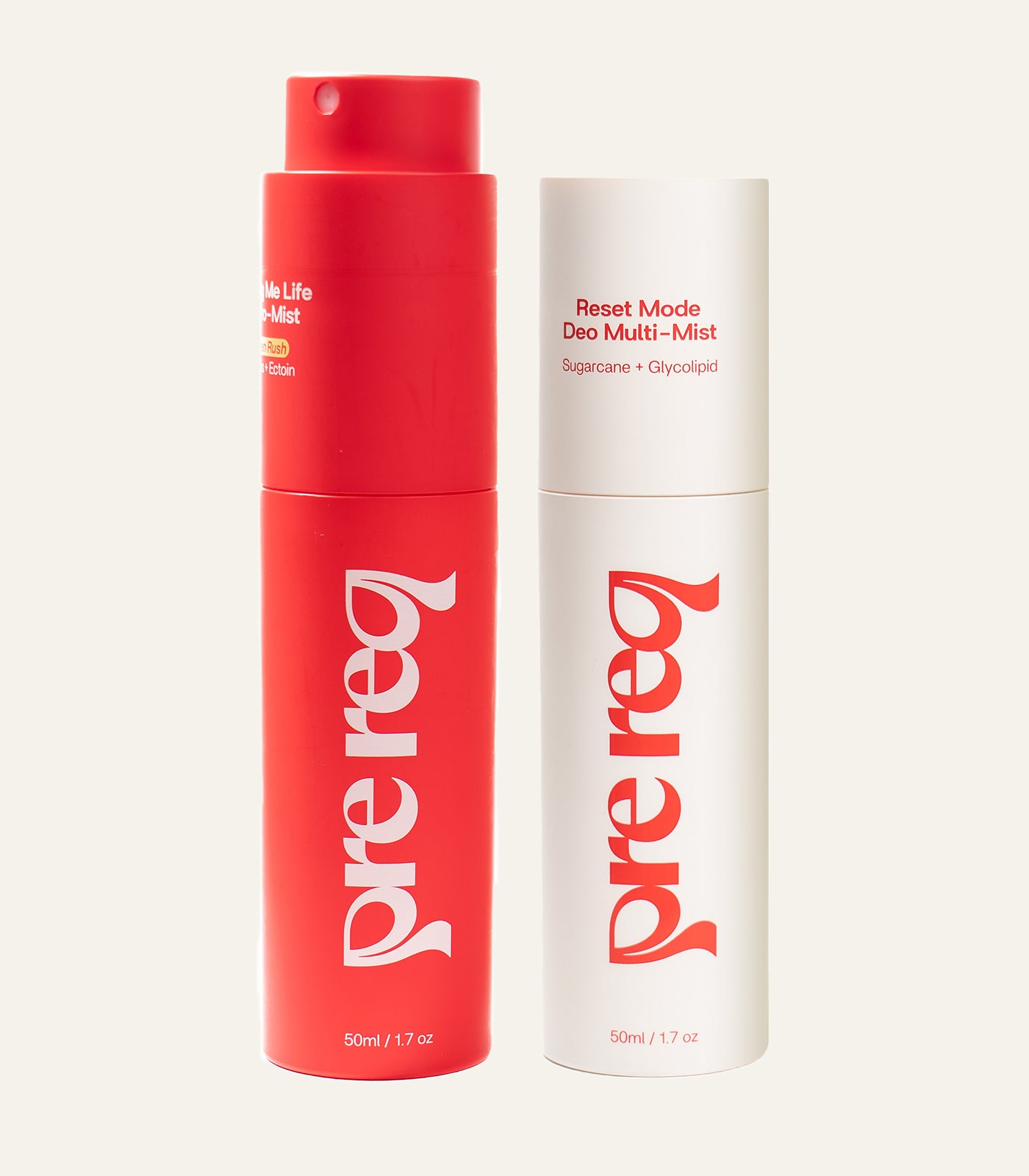
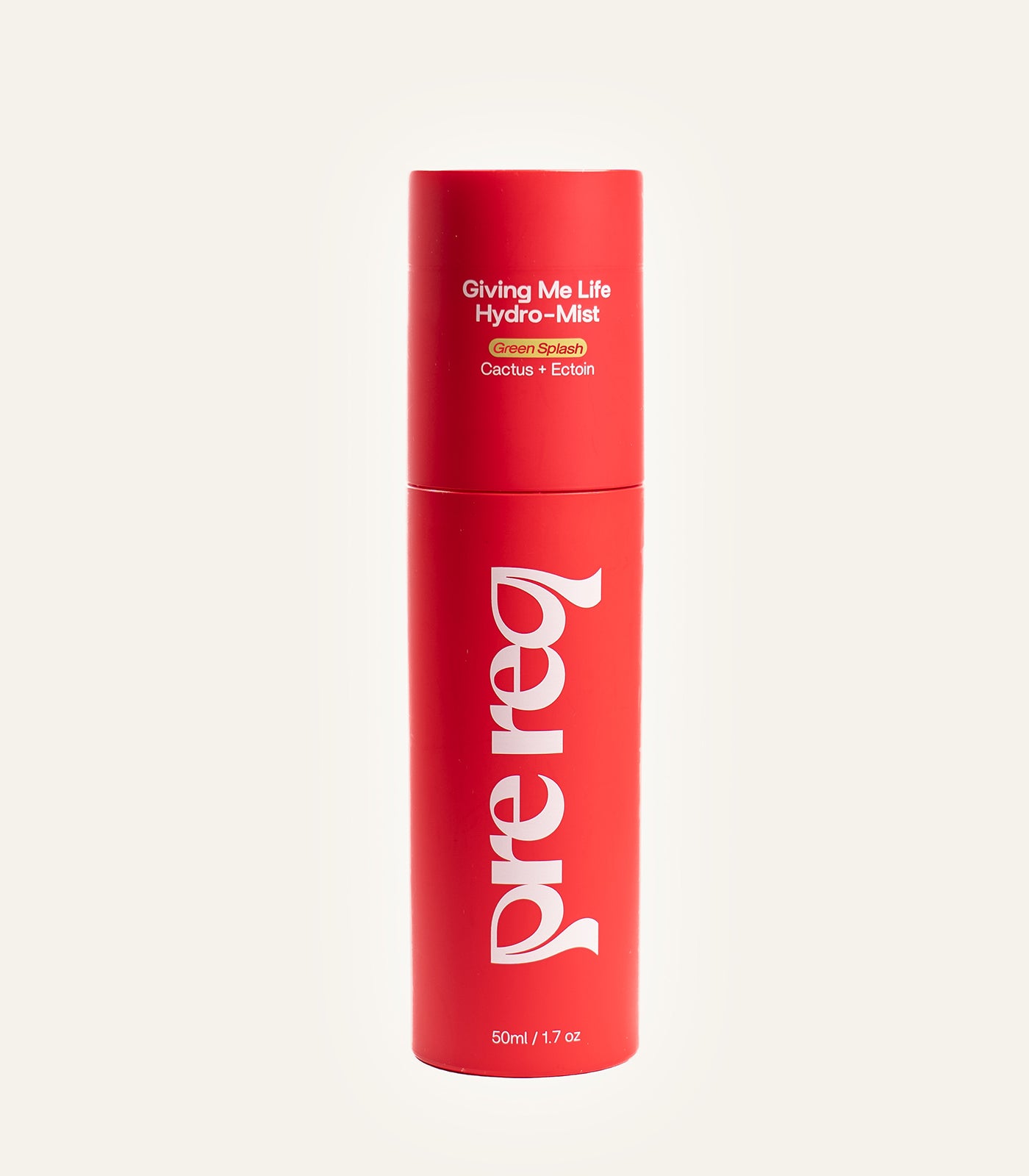
1. Prereq Giving Me Life Hydro-Mist: Best Hydrating Product for Preteens
Price: $19.99 | Shop Now →
What it does: Delivers immediate hydration and 24-hour moisture retention. Protects the skin barrier from environmental stressors, including pollution and screen-emitted blue light.
Key ingredients and why they matter:
-
Ectoin forms a protective film over skin cells, shielding against pollution and blue light. At an age where kids are on screens for hours daily, this is genuinely useful protection.
-
Opuntia Ficus-Indica (Calming Cactus) Stem Extract provides 24-hour hydration without clogging pores. Non-comedogenic and safe for acne-prone skin.
-
Sodium Hyaluronate pulls moisture into the skin and keeps it there, supporting barrier function during puberty-related skin changes.
-
Cucumber Fruit Extract reduces skin irritation and redness on contact.
-
Glycerin is a humectant that prevents transepidermal water loss (moisture leaving the skin throughout the day).
Safety profile: Free from retinols, acids, synthetic fragrance, parabens, and alcohol. Co-created with 50 real preteens. Dermatologist-approved by Dr. Tiffany Libby for ages 8+.
Format: Spray mist. Portable, refillable, and designed to fit in a backpack, not just a bathroom.
How to use: Spray on face or body after school, post-workout, before sunscreen reapplication, or whenever skin feels tight or dry. Safe for daily use, multiple times per day.
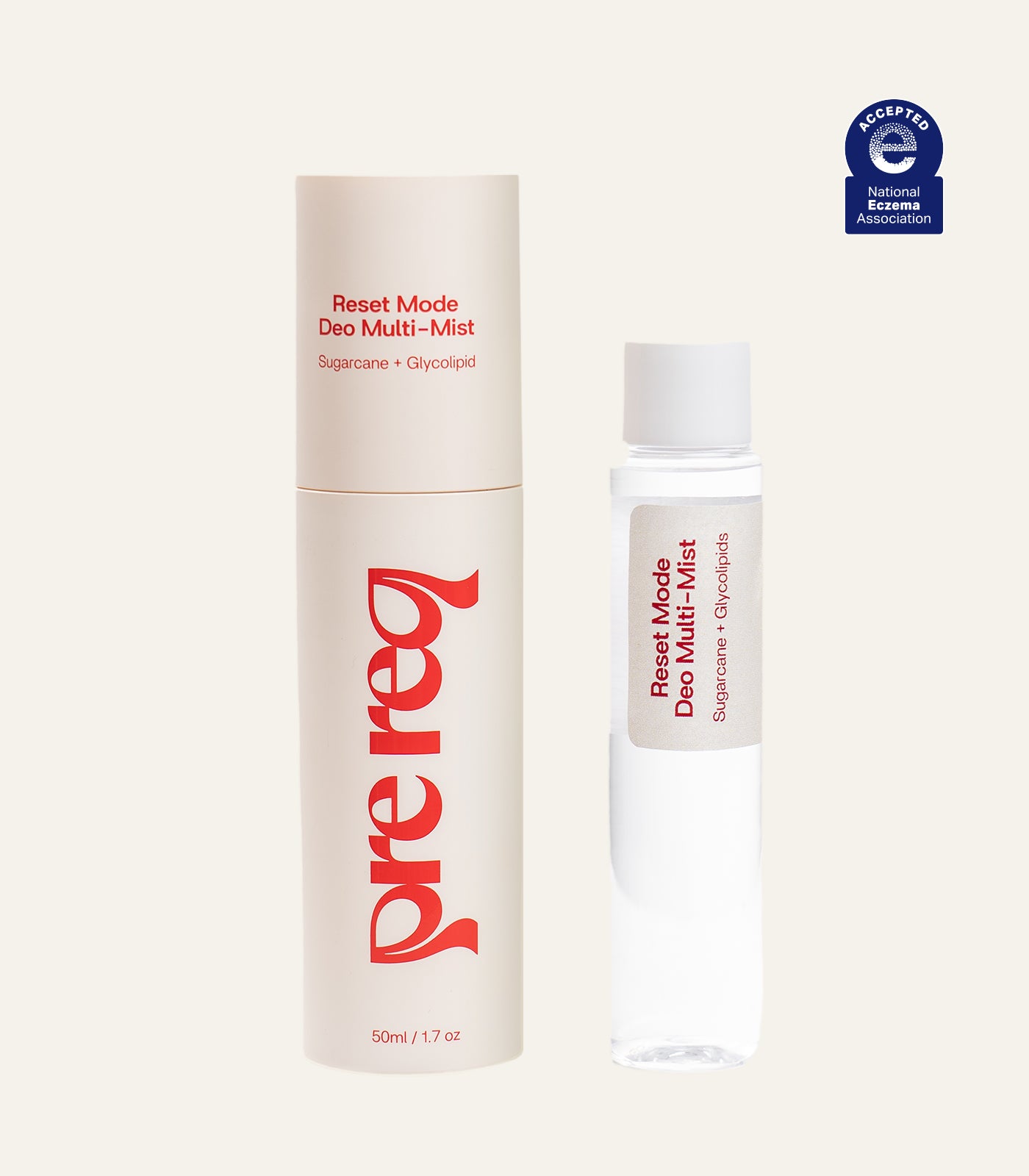
2. Prereq Reset Mode Deo Multi-Mist: Best Deodorant for 10-Year-Olds
Price: $19.99 | Shop Now →
What it does: Neutralizes odor-causing bacteria and supports the skin's microbiome. Works on underarms, feet, and body. Carries the National Eczema Association (NEA) Seal of Acceptance, one of the most rigorous safety certifications available for topical products.
Body odor in children typically begins between ages 8 and 10, driven by the activation of apocrine sweat glands during early puberty. Most adult deodorants use aluminum salts to block sweat glands, a mechanism that is unnecessary and potentially disruptive for preteen skin. The Reset Mode Deo Multi-Mist controls odor through a different approach entirely.
Key ingredients and how they work:
-
Saccharomyces Ferment Filtrate (Sugarcane fermentation) neutralizes the bacteria that produce odor rather than simply masking the smell. Clinical data support its ability to reduce odor-causing bacterial activity by up to 60%.
-
Glycolipids protect the skin barrier by selectively inhibiting harmful bacteria while preserving the beneficial microbiome.
-
Vanilla Planifolia Fruit Extract, natural, mild scent. No synthetic fragrance.
-
Coconut Fruit Extract additional soothing and skin-supporting properties.
Safety profile: No aluminum, no baking soda, no parabens, no synthetic fragrance, no phthalates. NEA-approved. Safe for sensitive skin and eczema-prone skin.
How to use: Spray on underarms, feet, or anywhere odor control is needed. Safe for use multiple times daily.
For parents wondering whether aluminum-free deodorant actually does the job, this breakdown on whether aluminum-free deodorant actually works for kids covers the evidence directly.
3. Prereq Daily Duo: Best Value Starter Kit
Price: $35.99 (regularly $40.00) | Shop Now →
What it is: The Giving Me Life Hydro-Mist and the Reset Mode Deo Multi-Mist bundled together. This is the two-product routine that covers everything a 10 year old genuinely needs, hydration and odor control, in one discounted purchase.
Dr. Libby's recommended routine for active preteens is exactly this combination: "Use the Reset Mode and Giving Me Life mists together to refresh after sweat, reduce redness, and support the microbiome. It's a simple, effective routine that is both dermatologist-approved and mom-approved."
Best for: Parents building a first routine for their preteen. Both products are refillable, so the initial purchase is a one-time bottle cost.
4. Prereq Camp Edit: Best for On-the-Go and Active Kids
Price: $45.99 (regularly $52.99) | Shop Now →
What it is: The Hydro-Mist, the Deo Multi-Mist, and the Prereq Backpack Pouch in one summer bundle.
Best for: Kids heading to summer camp, sports programs, or any setting where self-care needs to happen away from home. The durable, leak-proof pouch keeps both products organized and accessible throughout the day, which dramatically improves the odds that a 10-year-old actually uses them.
5. A Fragrance-Free, Ceramide-Based Cleanser
Look for a gentle, non-foaming or low-foaming cleanser built around ceramides, fragrance-free, and non-comedogenic. This type of formula cleans without stripping the skin barrier, which matters more at this age than at any other. Once daily at night is enough for most 10-year-olds; over-washing triggers more oil production, not less.
A widely available option that meets this standard is CeraVe Hydrating Facial Cleanser, one of the most consistently dermatologist-recommended cleansers for preteen skin.
Pair it with the Giving Me Life Hydro-Mist → right after cleansing to lock in hydration while skin is still damp.
6. A Cream or Jelly Cleanser for Drier, Combination Skin
For 10-year-olds with naturally dry or combination skin who find standard foaming cleansers too stripping, look for a cream- or jelly-textured cleanser built around ceramides, fragrance-free, that cleans and hydrates in the same step rather than leaving skin feeling tight afterward.
BYOMA Creamy Jelly Cleanser is one option that fits this profile, formulated with a tri-ceramide complex and free of synthetic fragrance.
Follow up with Giving Me Life Hydro-Mist → to reinforce hydration on drier skin types.
7. A Lightweight, Oil-Free Moisturizer
Look for a lightweight, oil-free moisturizer with barrier-supporting, non-irritating ingredients rather than heavy or occlusive creams. Niacinamide is fine to see on the label at this age; it's a gentle, well-tolerated ingredient widely used in kids' and sensitive-skin formulas to calm redness and support the barrier, unlike a treatment-strength active such as retinol or a high-percentage acid.
Bubble Slam Dunk Hydrating Moisturizer is one example: aloe leaf juice, vitamin B5, and niacinamide, lightweight, non-greasy, and free from parabens and synthetic fragrance. Apply after evening cleansing, or any time skin feels dry during the day.
For a lighter, mist-format alternative that layers well under or over a moisturizer, shop Giving Me Life Hydro-Mist →.
8. A Combined Moisturizer + Mineral SPF for Faster Mornings
For mornings when time is short, a moisturizer-and-sunscreen-in-one step can work well, as long as the SPF portion is still a 100% mineral formula (zinc oxide and/or titanium dioxide only, per the label check in pick #9). Look for ceramides or hyaluronic acid for hydration, fragrance-free, and non-comedogenic.
CeraVe AM Facial Moisturizing Lotion SPF 30 is a practical example, pairing a ceramide and hyaluronic acid moisturizer with SPF 30 mineral protection in one step.
Keep Reset Mode Deo Multi-Mist → in the same morning routine for odor control once SPF and moisturizer are on.
9. A 100% Mineral Sunscreen, SPF 30 or Higher
For 10-year-olds, the safest default is a 100% mineral sunscreen, one that relies solely on zinc oxide and/or titanium dioxide to physically block UV rays, with no chemical UV filters like avobenzone, homosalate, octisalate, or octocrylene in the formula. Mineral filters sit on top of the skin rather than absorbing into it, which matters given how much more permeable 10-year-old skin is.
A good example that meets this standard is Supergoop! Mineral Unseen Sunscreen SPF 40 — check the label for "Mineral" in the product name specifically, since Supergoop also sells a separate chemical-filter version under a very similar name. The mineral version is weightless, fragrance-free, and non-comedogenic, with zinc oxide and titanium dioxide as its only active ingredients.
Whichever brand you choose, the label check is simple: flip the bottle over, and if the active ingredients list anything other than zinc oxide or titanium dioxide, it's a chemical formula, and better saved for later.
A spray of Giving Me Life Hydro-Mist → over sunscreen mid-day is an easy way to refresh hydration without disturbing SPF coverage.
10. A Fragrance-Free, Occlusive Lip Balm
Lips have no sebaceous glands of their own, so they lose moisture faster than the rest of the face and are often the first area to show dryness. A simple, occlusive lip balm, look for shea butter, beeswax, or ceramides as the main ingredients, hydrates and protects without introducing anything unnecessary. Because lip skin behaves differently from face and body skin, it's one of the few areas where a mild treatment ingredient like a light vitamin C or antioxidant complex (as in something like Laneige's Lip Sleeping Mask) is reasonable even at this age, but it's not a requirement. A plain, fragrance-free balm does the essential job just as well, and is the safer default if you'd rather keep every product in the routine fully active-free.
A Simple Skincare Routine for 10-Year-Olds
The most effective routine is one a child will actually follow. At age 10, that means simple, fast, and portable.
Morning (under 3 minutes):
-
Rinse face with lukewarm water
-
Apply mineral sunscreen (SPF 30+)
-
Spray Giving Me Life Hydro-Mist for hydration and barrier support
-
Apply Reset Mode Deo Multi-Mist to underarms or anywhere needed
Evening (under 3 minutes):
-
Wash face with gentle, fragrance-free cleanser
-
Apply a lightweight moisturizer or one additional spray of Hydro-Mist
That is a complete, dermatologist-appropriate routine for age 10. Nothing else is required.
A skincare routine for 12 year olds should stay gentle and consistent as skin begins to change during puberty. A simple routine with a mild cleanser, a lightweight moisturizer, and mineral sunscreen each morning is usually enough for healthy skin. If oiliness or occasional breakouts appear, choosing non-comedogenic products and avoiding harsh scrubs can help keep the skin balanced while protecting the developing skin barrier.
What Makes Prereq Different
Most skincare marketed to kids is either an adult product in child-friendly packaging or so basic it has no meaningful effect. Prereq was formulated specifically for the preteen age group, not adapted from adult formulas.
What sets it apart:
-
Every formula was reviewed by Dr. Tiffany Libby, MD, MPH, a double board-certified dermatologist and Brown University faculty member, specifically for safety on developing skin. Read Dr. Libby's full review and recommendations.
-
Products were co-created with 50 real preteens (ages 8-12) who shaped the scents, formats, and formulas from the beginning.
-
The Reset Mode Deo Multi-Mist holds the NEA Seal of Acceptance, a certification that requires formulas to be free from all known skin irritants and safe for eczema-prone skin.
-
Every product is refillable; the bottle is purchased once, and only the formula is replaced on refill. Reduces packaging waste and lowers the ongoing cost.
-
The full ingredient list for every product is publicly disclosed. For a detailed breakdown of what's in the Hydro-Mist and why each ingredient was included, see the full Giving Me Life Hydro-Mist ingredient breakdown.
→ Shop the full Prereq collection
Frequently Asked Questions
1. Is skincare safe for 10-year-olds?
Yes, when products are formulated appropriately for their age. The critical issue is ingredient selection. Ten-year-old skin is thinner and more permeable than adult skin, meaning topical ingredients absorb more readily and deeply. Products containing retinoids, high-concentration acids, aluminum, synthetic fragrances, or parabens are not safe for this age group. Products formulated specifically for preteen skin, with gentle, clinically appropriate ingredients, are both safe and beneficial.
2. Do 10-year-olds need skincare?
At age 10, the basics are genuinely useful: a gentle cleanser to remove sweat and environmental debris, a moisturizer or hydrating mist to support the skin barrier, sunscreen for daily UV protection, and a deodorant if body odor has begun. That covers the real needs of this age group. More complex products, serums, toners, exfoliants, and treatment actives are not appropriate and are not necessary.
3. What skincare ingredients should kids avoid?
The main categories to avoid: retinol and retinoids (too strong for developing skin), high-concentration salicylic acid or AHAs, benzoyl peroxide without dermatologist guidance, synthetic fragrances (a leading cause of contact dermatitis in children), parabens and phthalates (endocrine disruptors), and aluminum compounds in deodorants (unnecessary and potentially disruptive for preteen skin).
4. How often should a 10-year-old wash their face?
Once daily, in the evening, is the standard recommendation for most 10-year-olds. A plain water rinse in the morning is sufficient on days without heavy activity. Washing more than once daily can strip the skin's natural lipid barrier, which increases oil production as a compensatory response, potentially worsening rather than preventing breakouts.
5. What is the best skincare routine for a 10-year-old?
A morning routine of sunscreen and hydrating mist, and an evening routine of gentle cleanser plus lightweight moisturizer. If deodorant is needed, add it to the morning routine. That covers the real needs of this age in under five minutes per day.
6. Can a 10-year-old start using deodorant?
Yes. The American Academy of Pediatrics notes that body odor associated with early puberty typically begins between ages 8 and 10. At this age, a deodorant (not an antiperspirant) is appropriate. The difference matters: deodorants neutralize odor, while antiperspirants block sweat glands using aluminum compounds, a mechanism that is not recommended for preteen skin. For a full explanation of how body odor starts and what to do about it, see why children suddenly develop body odor and what parents need to know.
7. Can 10-year-olds use acne products?
Not standard over-the-counter acne treatments. Products containing high-concentration salicylic acid, benzoyl peroxide, or retinoids are too aggressive for 10-year-old skin and can cause dryness, irritation, and barrier disruption. For mild, early breakouts, a gentle zinc-based spot treatment is more appropriate. Persistent or spreading acne at this age should be evaluated by a pediatric dermatologist.
8. What is the difference between a deodorant and an antiperspirant, and which is right for kids?
Deodorants work by reducing or neutralizing the bacteria that cause odor. Antiperspirants use aluminum salts to physically block sweat glands. Dermatologists recommend deodorant, not antiperspirant, for preteens. Blocking sweat gland function is not medically necessary at this age, and aluminum-based compounds are not appropriate for use on developing preteen skin.
9. Is skincare the same for boys and girls at age 10?
Yes. The physiological changes happening at age 10, increased sebum production, apocrine gland activation, and skin microbiome shifts, are driven by hormonal changes that affect all children regardless of gender. A basic skincare and self-care routine (cleanser, moisturizer, SPF, deodorant) is appropriate and beneficial for every 10-year-old.
10. How do I get a 10-year-old to actually use their skincare products?
Compliance at this age depends heavily on format and convenience. Spray mists require less effort and feel less like a "routine" than creams or multi-step systems. Products that travel, in a backpack, gym bag, or pouch, get used far more consistently than products stored in a bathroom. Keeping the routine to two or three products, rather than five or more, dramatically improves follow-through.
Summary
At age 10, the goal of skincare is straightforward: protect the skin barrier, maintain hydration, block UV exposure, and address early odor if needed. The products that serve those goals best are gentle, ingredient-transparent, and designed for the developmental stage a 10-year-old is actually in, not adapted from adult formulas.
Prereq's lineup was built for exactly this: formulated with age-appropriate ingredients, reviewed by a board-certified dermatologist, co-created with real preteens, and designed to be used in real life, not just at home in a bathroom.
→ Shop the Prereq collection and get 10% off your first order when you join the Real Ones Club.
This article is for informational purposes only. It does not constitute medical advice. If your child has a skin condition, consult a board-certified pediatric dermatologist before starting any skincare routine.

