


Yes, Aluminum-Free Deodorant do Actually Works for Kids, and for most kids, it works better than the alternative.
Aluminum-free deodorant controls body odor without blocking sweat glands, which is exactly what developing skin needs.
No harsh chemicals, no pore-clogging ingredients, just real odor protection that's safe for young, sensitive skin. But with so many options on the shelf, knowing what's actually safe versus what's just good marketing can feel overwhelming. Here's everything you need to know before you buy.
Why Kids Don't Need Antiperspirant?
When body odor first shows up, usually somewhere between ages 8 and 12 when puberty kicks in, the instinct is to grab whatever works fastest off the shelf.
Most of the time, that means an antiperspirant. But antiperspirants and deodorants for kids are not the same product, and that difference really matters for kids.
Antiperspirants contain aluminum salts that physically plug sweat ducts to reduce sweating. Deodorants target the odor itself without interfering with the body's natural sweating process.
Kids need to sweat. It's how their bodies regulate temperature, especially during sports and active play. Blocking that with aluminum compounds isn't necessary at this age, and for young, sensitive skin, it can cause real irritation right where you least want it.
A good natural deodorant handles the actual problem, the stinky odor, without any of that.
Does Natural Aluminum-Free Deodorant Actually Work?
This is the question every parent asks, usually after their kid comes home from practice and clears the room.
The honest answer is yes, but the formula matters a lot.
Not all natural deodorants are created equal. Some use ingredients that genuinely neutralize odor at the source.
Others just layer a scent on top and hope for the best, which works about as well as it sounds.
What actually works is targeting the bacteria that cause odor in the first place.
Odor doesn't come from sweat itself; it comes from bacteria on the skin breaking sweat down. The right ingredients stop that process instead of masking it.
Sugarcane fermentation technology like DeoPlex® has been clinically shown to cut odor by up to 60% by neutralizing odor-causing compounds at the source.
That's a tested, measurable result, not a label claim. That's the kind of ingredient worth looking for when choosing a deodorant for kids.
What to Look for in Aluminum-Free Deodorant for Kids
The ingredient list tells you everything. Here's what actually matters:
Aluminum-free formula
Non-negotiable for kids. Young underarm skin is thin and reactive. There's no reason to introduce aluminum salts when odor control is the only real goal, not sweat prevention.
No baking soda
It shows up in a lot of natural deodorants because it sounds gentle. But baking soda is alkaline enough to disrupt skin pH and cause redness, rashes, and irritation on sensitive underarms, especially skin that's new to deodorant.
No synthetic fragrance or perfume
"Fragrance" on a label is a catch-all that can hide dozens of undisclosed chemicals, including known allergens. Look for products that clearly list their scent source instead of burying it behind one vague word.
No parabens or phthalates
These common preservatives have been linked to skin sensitization and hormonal interference. During puberty, when the endocrine system is already in overdrive, unnecessary chemical exposure is the last thing developing skin needs.
Short, readable ingredient list
If you need a chemistry degree to get through it, move on. The best deodorant for kids keeps it simple, with ingredients you can actually look up and understand without a dictionary.
What to Avoid
A few more worth skipping for young skin:
Harsh alcohols like ethanol dry out and sting thin underarm skin, especially right after first application.
Propylene glycol can sensitize reactive skin over time.
Heavy coconut oil or shea-based formulas work great for some, but can feel too thick or clog pores on young skin that's still figuring out its own balance.
And strong essential oil scents, however natural, can irritate fresh, sensitive armpits.
The goal is a formula that works with young skin, not one that fights it.
Sensitive Skin and Eczema: What Parents Need to Know
If your kid has sensitive skin, eczema, or a history of reacting to personal care products, the bar for choosing a deodorant gets higher, but it's very clear.
Look for products carrying the NEA Seal of Acceptance from the National Eczema Association.
This isn't a self-reported claim. It means the product has been independently reviewed and verified as free from known irritants and safe for eczema-prone skin. Very few deodorants for kids carry this, so when one does, it genuinely means something.
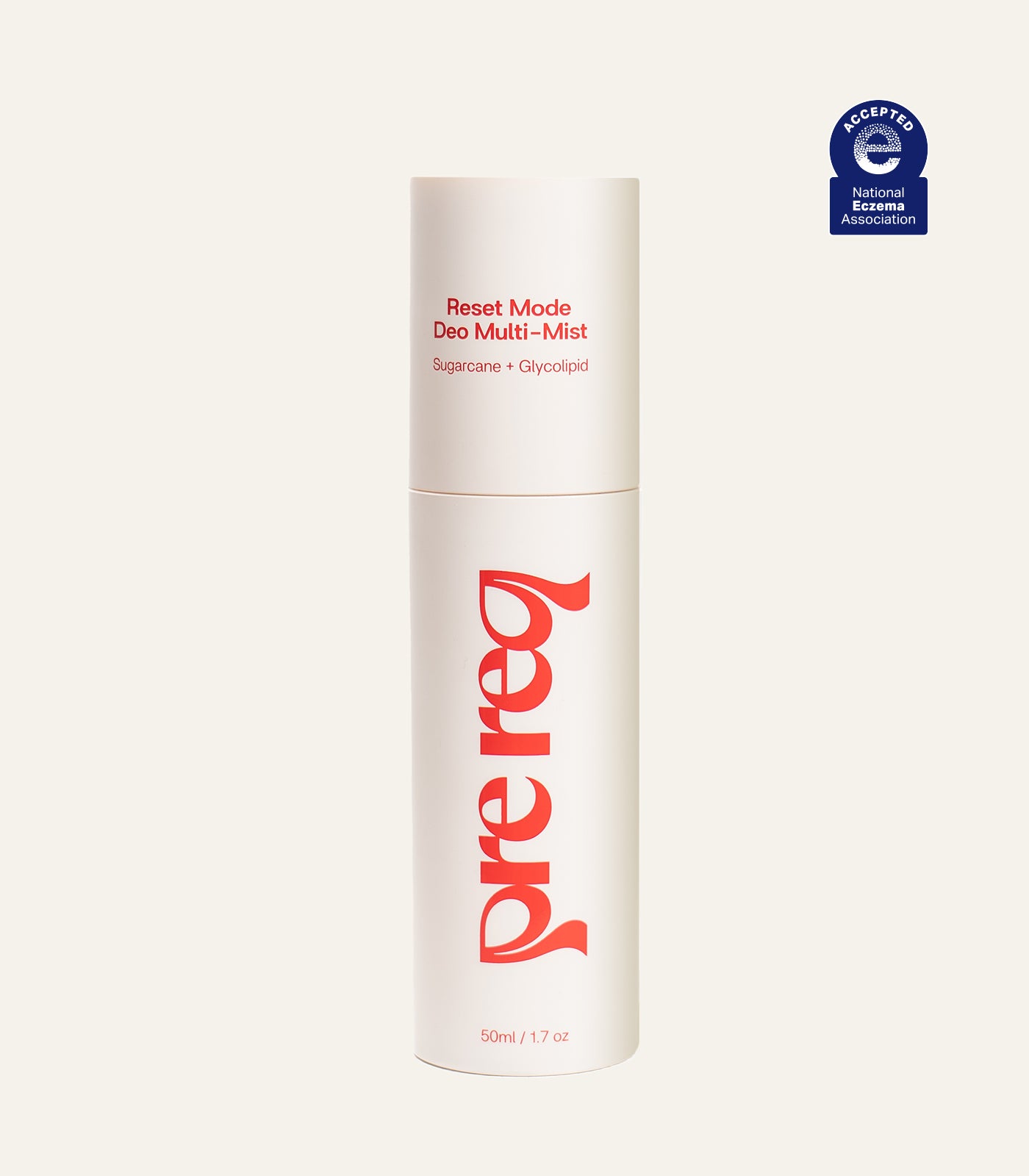
PreReq Care's Reset Mode Deo Multi-Mist is one of the only tween-targeted deodorants with the NEA Seal of Acceptance.
It's aluminum-free, baking soda-free, paraben-free, and uses sugarcane fermentation to neutralize odor without disrupting the skin barrier. For kids who've burned through options that caused armpit irritation or rashes, this tends to be the one that finally sticks.
Stick, Roll-On, or Mist: Which Works Best for Kids?
Format matters more than most parents expect, especially for kids new to the whole routine.
Sticks are familiar but can leave white marks on clothes, which is a bigger deal to a tween than you might think. Some contain shea or coconut oil that works great for certain skin types, but feels heavy for others.
Roll-ons glide on smoothly and tend to be gentle, but the wet application and drying time can put kids off using them consistently.
Mists are the most practical for active pre-teens and teens. Spray and go, no white marks, no drying time, no mess. Easy enough to use between classes, after gym, or before practice. And because it's that easy, kids are far more likely actually to use it every day.
Consistency is everything with natural deodorant. Daily use on clean, dry underarms makes the biggest difference; one or two sprays is plenty.
Frequently Asked Questions
At what age should kids start using deodorant?
Most kids start needing deodorant between ages 8 and 12, when puberty activates the apocrine sweat glands and body odor begins. There's no fixed age; the right time is simply when you start noticing odor after activity or at the end of the day. Starting early with a gentle, aluminum-free formula is always the safer move.
Is aluminum-free deodorant safe for kids with sensitive skin?
Yes, and it's actually the better choice. Aluminum-free formulas skip the pore-blocking compounds that irritate young, reactive underarm skin. For kids with eczema or highly sensitive skin, look specifically for products carrying the NEA Seal of Acceptance, which is independent verification, not just a brand claim.
Will aluminum-free deodorant stop my kid from sweating?
No, and that's a good thing. Aluminum-free deodorant controls odor without blocking sweat. Kids need to sweat freely, especially during sports, because it's how the body regulates temperature. Only antiperspirants block sweat using aluminum, and those aren't necessary or recommended for most kids.
Why does my kid's natural deodorant cause a rash?
The most common culprit is baking soda. It's popular in natural deodorants but alkaline enough to disrupt skin pH and cause redness, rashes, and burning on young underarm skin. Switch to a baking soda-free formula, and the irritation usually clears up quickly.
How long does aluminum-free deodorant take to work?
It works from the first application, no adjustment period needed, unlike switching from an antiperspirant as an adult. For kids starting fresh, a good aluminum-free formula provides noticeable odor protection right away, especially when applied daily to clean, dry underarms.
Can boys use aluminum-free deodorant, too?
Absolutely. Body odor doesn't discriminate, and neither does deodorant. Most aluminum-free deodorants for kids work for all genders. For boys, look for a light, clean scent rather than heavy fragrances, or go fragrance-free entirely.
What is the difference between deodorant and antiperspirant?
Deodorant targets odor by neutralizing odor-causing bacteria. Antiperspirant reduces sweating by using aluminum salts to block sweat ducts physically. For kids, deodorant is almost always the right call; they need odor protection, not sweat prevention, and their skin doesn't need exposure to aluminum at this stage.
How often should kids apply aluminum-free deodorant?
Once daily, cleaning and drying underarms is enough for most kids. Right after a shower gives the best results. For active kids with back-to-back sports or long school days, a quick midday reapply, especially with a mist, keeps things fresh and confident without overdoing it.
Are there aluminum-free deodorants strong enough for really active kids?
Yes, look for clinically tested odor-neutralizing ingredients rather than just masking scents. Sugarcane fermentation technology like DeoPlex® cuts odor by up to 60%, which holds up through real activity, gym class, sports practice, full school days, not just light daily use.
Can aluminum-free deodorant be used on feet and body, not just underarms?
Yes, especially mist formats. Feet are a major source of odor for active kids in sneakers all day. A multi-mist formula like PreReq Care's Reset Mode Deo Multi-Mist is designed for underarms, feet, and body, making it a practical all-in-one for kids who are always on the go.
Conclusion
Aluminum-free deodorant absolutely works for kids, as long as the formula is right.
Skip the aluminum, the baking soda, the hidden fragrance, the parabens, and the phthalates. Look for independently verified formulas built specifically for young, sensitive skin.
Your kid gets real odor protection that keeps them fresh and confident through whatever the day throws at them. You get peace of mind knowing exactly what's going on their skin.

