


The best deodorants for kids in 2026 are aluminum-free, fragrance-free, and formulated specifically for pre-teen skin n,ot scaled-down adult formulas. Most store-bought options were built for grown skin, and using them on a 9-year-old can irritate, dry out, or disrupt a skin barrier that's still developing.
This guide covers two picks, both from Prereq Care, dermatologist-vetted and made specifically for pre-teen and teen skin: a mist built for odor control, and a hydrating mist for kids dealing with dryness or sensitivity on top of sweat.
When Do Kids Need Deodorant?
Kids need deodorant as soon as body odor starts, which is often years before puberty itself. The trigger is adrenarche, an early hormonal shift, typically between ages 7 and 10, that activates the apocrine sweat glands in the underarms. Once those glands switch on, sweat mixing with skin bacteria creates odor, often well before any other signs of puberty appear.
Most parents assume deodorant is a 13-year-old milestone, not an 8-year-old one. But body odor and puberty don't always show up together, so age alone isn't a reliable signal.
So when do kids start wearing deodorant? When they start smelling. There's no fixed age. Some kids need it at 7. Others not until 12. The odor is the signal, not a birthday.
-
Is 9 too early for deodorant? No, if there's odor, it's the right time.
-
Is it normal for a 7-year-old to have underarm odor? Yes, early adrenarche is common and usually benign.
-
At what age do most girls start? Apocrine activity typically develops between 8 and 10 in girls.
-
Kids' deodorant for boys: when do they need it? Usually between 9 and 12, but odor is still a better guide than age.
If your child has persistent underarm odor that doesn't improve with regular washing, mention it at their next pediatric visit.
Many parents begin searching for the best deodorant options for kids once body odor becomes noticeable. Instead of choosing the strongest product, focus on one that matches your child's age and skin type. A good first deodorant should control odor without causing irritation, especially if your child has sensitive skin. Look for aluminum-free, dermatologist-tested formulas with simple ingredients and avoid products with heavy fragrances or harsh chemicals. Starting with a gentle deodorant helps your child build healthy hygiene habits while staying fresh and comfortable every day
What to Look for (and What to Avoid) in Kids' Deodorant
Not all deodorants belong on pre-teen skin. Here's what makes a deodorant safe for kids, and what to leave on the shelf.
Safe ingredients
Ferment-based odor neutralizers, like Saccharomyces Ferment Filtrate (from sugarcane), target odor-causing bacteria without blocking pores, very different from aluminum formulas that stop sweat entirely.
Microbiome-supporting ingredients like glycolipids protect the skin's natural bacterial balance, keeping the good bacteria intact while reducing the ones responsible for odor. Smarter than just masking smell.
Gentle hydrating bases like propanediol and coconut extract keep skin comfortable, especially for kids with eczema-prone or sensitive skin.
Natural fragrance only: if a label says "parfum" or "fragrance" without specifying the source, skip it. Synthetic fragrance can contain hundreds of undisclosed chemicals and is more likely to irritate younger skin.
Ingredients to avoid
Aluminum compounds block sweat ducts. Unnecessary for kids and potentially harsh on developing skin.
Baking soda is highly alkaline and disrupts the skin's acid mantle. It's a frequent irritant for sensitive and eczema-prone skin despite its natural reputation.
Parabens and phthalates carry endocrine-disrupting concerns that are amplified in developing bodies.
Synthetic fragrance (listed as "parfum") can trigger contact dermatitis and allergic reactions in kids with reactive skin.
The 2 Best Deodorants for Kids in 2026
Both picks are from Prereq Care, a brand built specifically for pre-teen and teen skin, with dermatologist-vetted formulas and kids' deodorant-safe ingredients. Here's what makes each one work.
1. Reset Mode Deo Multi-Mist - Best Aluminum-Free Deodorant Spray for Kids
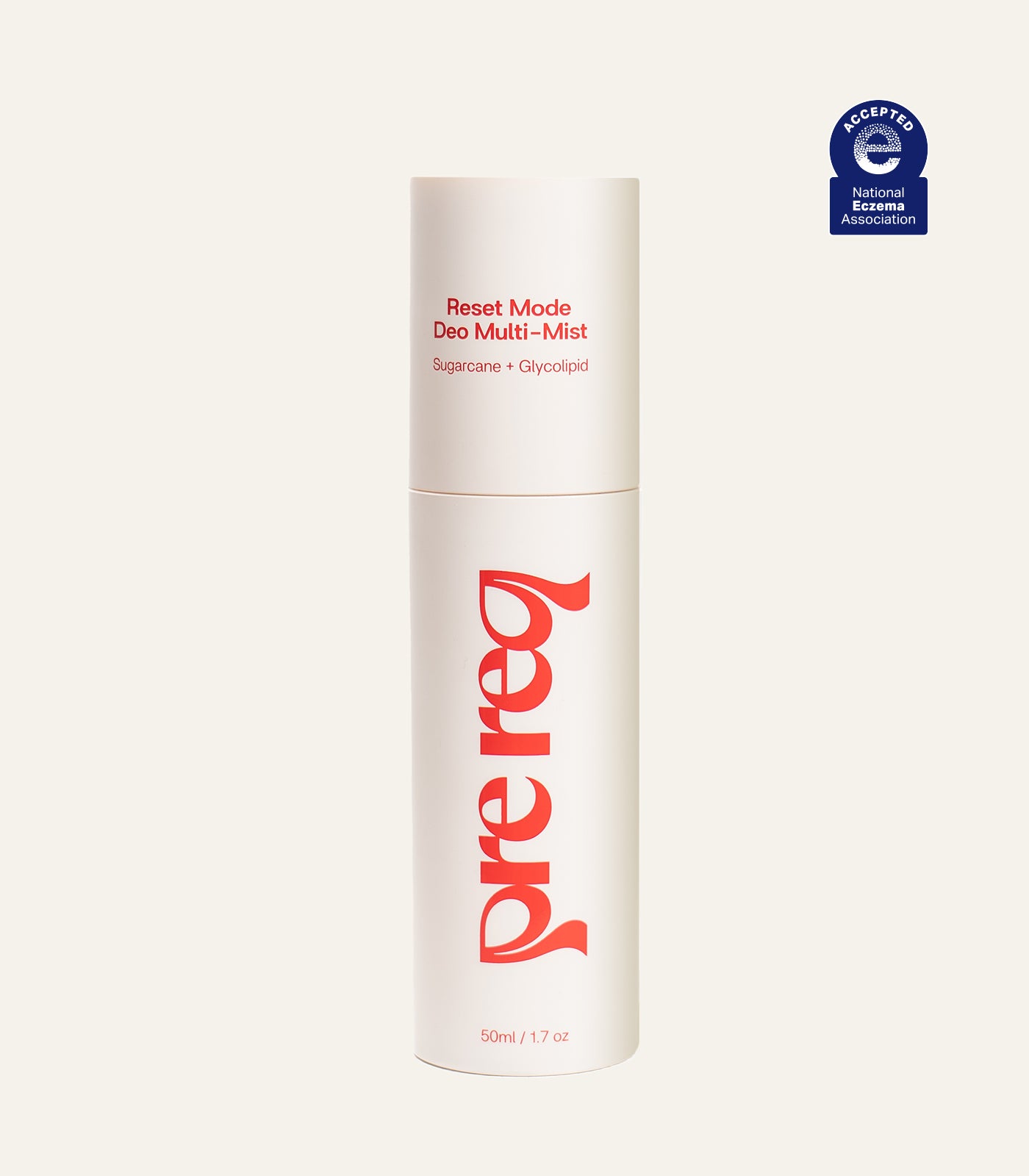
The Reset Mode Deo Multi-Mist carries the National Eczema Association (NEA) Seal of Acceptance, a certification that requires strict ingredient safety standards for sensitive skin. That's a meaningful credential when you're choosing a deodorant for a child with eczema-prone or reactive skin.
The formula is built around Saccharomyces Ferment Filtrate, a sugarcane-derived ingredient that neutralizes odor-causing bacteria by up to 60%. Unlike conventional deodorants that mask smell or block sweat, this works at the source, the bacteria, without clogging pores.
Glycolipids add a second layer by supporting the skin's microbiome. They keep protective bacteria in place while crowding out the ones responsible for odor. No aluminum. No baking soda. Dermatologist-approved for sensitive and acne-prone skin.
It's also a spray mist, not a stick; kids can use it on underarms, feet, and anywhere else that needs a refresh after sports or school. The bottle is refillable, so you buy the starter once and replace only the refill. Better for the environment and easier on the budget.
Best for: Kids ages 7+, active kids needing all-over odor control, and anyone with sensitive or eczema-prone skin.
How to use: Twist open, spray where needed, repeat as often as necessary. No rubbing, no residue.
2. Giving Me Life Hydro-Mist - Best Hydrating Deodorant Mist for Dry or Stressed Pre-Teen Skin
The Giving Me Life Hydro-Mist takes a different angle. Pre-teen skin isn't just dealing with sweat; it's navigating hormone-driven dryness, post-sport tightness, and daily exposure to pollution and blue light from screens. This mist was built for that reality.
The standout ingredient is Ectoin, a molecule discovered in microorganisms that survive in some of Earth's most extreme environments. Ectoin creates an invisible barrier on the skin's surface that shields against pollution particles and blue light. For a kid who spends hours in front of a screen and then heads to a sweaty practice, that kind of protection actually makes sense.
Calming Cactus (Opuntia Ficus-Indica stem extract) is the second key ingredient. Cactus plants hold water exceptionally well in extreme conditions; this extract brings that same property to skin, locking in moisture for up to 24 hours. For kids whose skin runs dry or tight after washing, it's the ingredient that makes the difference.
Clean formula: no harsh acids, no retinols, no synthetic fragrance, safe for sensitive and acne-prone skin. Refillable and designed to live in a backpack, not just a bathroom.
Best for: Kids with dry, sensitive, or combination skin; anyone needing a mid-day refresh after PE; kids who layer SPF throughout the day.
How to use: Twist open, spray on face or body, use daily. Safe over makeup or directly on bare skin.
How to Help Your Child Build a Deodorant Habit
The way you introduce deodorant matters as much as the product. Framing it as a hygiene correction can make kids feel self-conscious. Framing it as self-care, they get to own their work much better.
Tie it to an existing routine: After a shower, before getting dressed, attaching it to something they already do makes it automatic fast. Prereq's Building Your Routine guide is a practical resource for putting together a simple daily self-care routine for pre-teens.
Let them be in charge: Kids use something consistently when they choose it themselves. A spray mist is also lower-friction than a stick, less mess, less contact, less pushback.
Talk about it like body care, not body odor: "Taking care of your skin" lands very differently than "you smell." The language you use shapes how kids feel about their changing bodies.
For more on what's happening with pre-teen skin and how to support it, check out Prereq's Body Care guide.
FAQ
What is the safest deodorant for kids?
An aluminum-free, baking-soda-free formula with no synthetic fragrance. Third-party certifications help; the NEA Seal of Acceptance on Prereq's Reset Mode is one of the strongest indicators of safety for sensitive and eczema-prone skin.
At what age should kids start wearing deodorant?
Whenever they develop noticeable body odor, as early as 7 or 8 for some kids. There's no universal age. Odor is the signal.
Should kids use aluminum-free deodorant?
Yes. Aluminum-based antiperspirants block sweat glands, which is unnecessary for kids and can irritate developing skin. Aluminum-free deodorant for kids that targets odor-causing bacteria is a safer fit.
What deodorant is best for a 10-year-old?
A gentle formula with no aluminum, no baking soda, and no parabens. Prereq's Reset Mode is dermatologist-approved for all skin types, for both boys and girls.
Why does my kid still smell even with deodorant?
Usually one of three things: applying it to skin that isn't clean, using it too infrequently, or using a formula that only masks odor instead of targeting the bacteria that cause it. A microbiome-supporting formula addresses the source, not just the symptom.
Best Deodorant for Kids: Final Takeaway
The best deodorant for kids is aluminium-free, dermatologist-approved, and built for younger skin, not a downsized adult formula. Both Prereq picks in this guide meet that standard: gentle enough for daily use, effective enough to actually work.
For more self-care guidance built for pre-teens, visit Self Care 101. Parents can find a broader overview in the Parent's Guide.

