


The best deodorant for teens is one that is aluminium-free, baking soda-free, dermatologist-approved, and formulated for developing skin, not a scaled-down version of an adult product.
Teen skin is more permeable than adult skin, meaning it absorbs ingredients more deeply during puberty. Using the wrong deodorant, one with aluminium, synthetic fragrance, or parabens, can cause rashes, disrupt hormones, and irritate skin that is already adjusting to hormonal changes. Choosing the right formula based on your teen's specific skin type makes the difference between a product that works and one that causes more problems than it solves.
If your child is on the younger end, check out our guide to the best deodorants for tweens for age-specific picks too.
Why Teen Skin Needs a Different Kind of Deodorant?
Teen skin requires a different deodorant formulation because puberty makes the skin barrier more permeable and the endocrine system more vulnerable to chemical interference.
During adolescence, the sebaceous glands become more active, sweat production increases, and skin pH shifts, all of which change how ingredients interact with the skin. Board-Certified Dermatologist Dr. Tiffany Libby, MD (Strategic Advisor at Prereq Care), notes that adult deodorants commonly contain endocrine disruptors, parabens, phthalates, and synthetic fragrances that can mimic or block hormones in a developing body.
These are ingredients that adult skin can better tolerate, but that pose real risks for teens.
Teen skin specifically needs:
-
No aluminium: A common antiperspirant ingredient that physically blocks sweat glands and disrupts pore function
-
No parabens or phthalates: Preservatives linked to hormonal interference in developing bodies
-
No synthetic fragrance: The single most common trigger for allergic contact dermatitis in teen skin
-
Microbiome support: The skin's natural bacterial balance is still establishing itself during puberty and needs protection, not disruption
-
Gentle, barrier-safe formulas: Harsh ingredients can strip the acid mantle, leaving skin prone to irritation, breakouts, and infections
How to Choose the Best Deodorant for Teens by Skin Type?
The right teenage deodorant depends on your skin type. Sensitive skin needs fragrance-free, baking soda-free formulas. Oily or acne-prone skin needs lightweight, non-comedogenic formulas. Dry or reactive skin needs hydrating ingredients alongside odor control. Active or sweaty skin needs fermentation-based formulas that target odor-causing bacteria and can be safely reapplied throughout the day. Here's exactly what to look for in each case.
1. Sensitive Skin: Fragrance-Free and NEA-Approved
Sensitive teen skin reacts easily to synthetic fragrance, baking soda, and alcohol, causing redness, itching, and underarm rashes. During puberty, the skin barrier is thinner and more reactive, so even small irritants trigger a response.
What to look for:
-
No synthetic fragrance ("fragrance" or "parfum" on the label)
-
No baking soda; it disrupts skin pH and causes rashes
-
No denatured alcohol; it dries out and weakens the skin barrier
-
NEA Seal of Acceptance; the clinical standard for sensitive skin safety
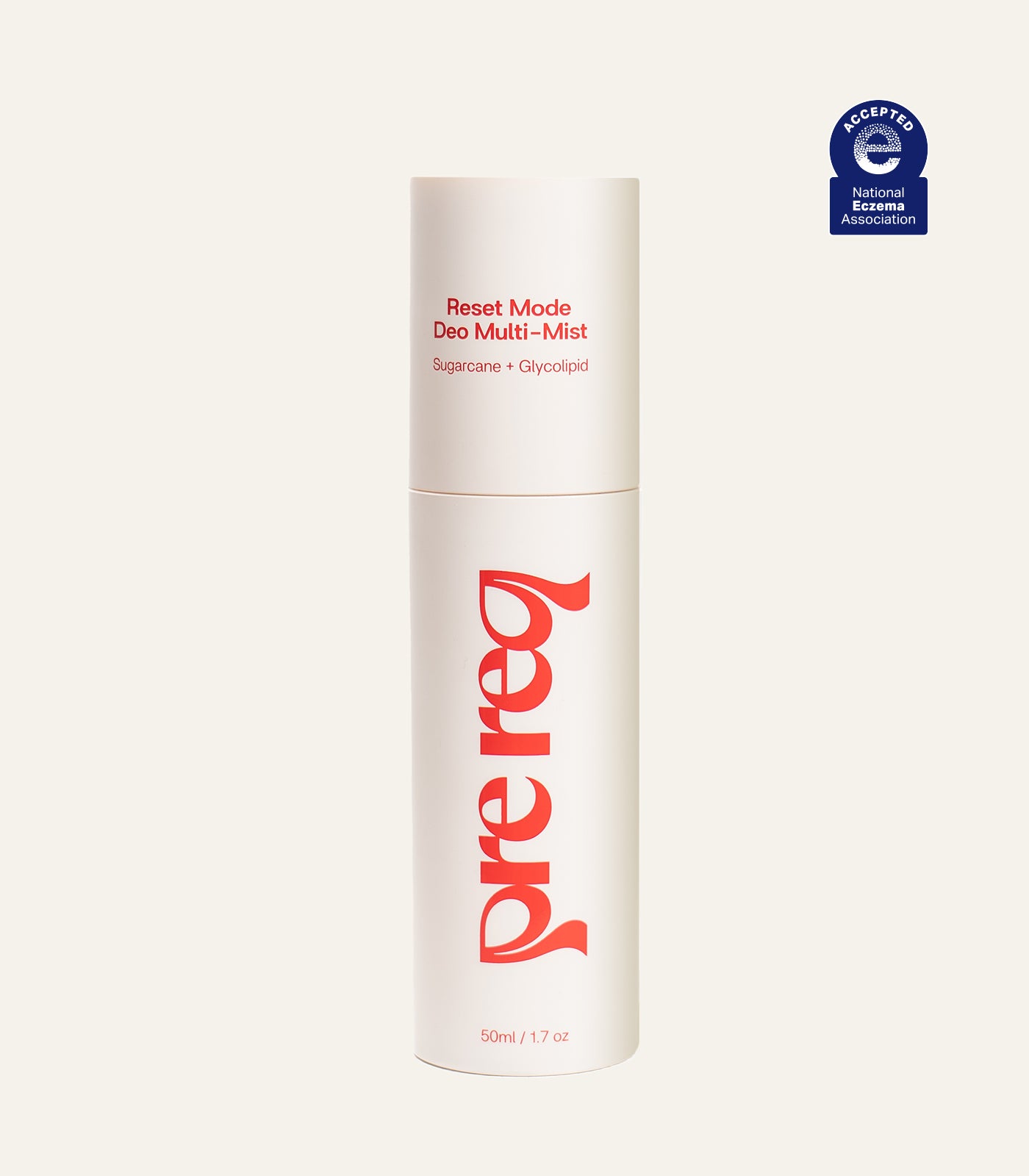
Prereq Reset Mode Deo Multi-Mist holds the NEA Seal of Acceptance: no aluminum, no baking soda, no synthetic fragrance.
2. Oily or Acne-Prone Skin: Lightweight, Non-Comedogenic
Heavy stick deodorants contain waxes that clog pores and block follicles, leading to underarm breakouts and irritation. Oily teen skin needs a format that absorbs fast and leaves zero residue.
What to look for:
-
Lightweight mist or spray; it absorbs instantly, no buildup
-
Non-comedogenic formula; it won't clog pores or cause folliculitis
-
Microbiome-supportive ingredients; they balance bacteria without stripping skin
Reset Mode applies as a fine mist that dries on contact; ideal for oily and acne-prone skin.
3. Dry or Reactive Skin: Hydrating + Gentle
Deodorants with alcohol or witch hazel strip the skin barrier, leaving underarms flaky and prone to irritation with every use. Dry teen skin needs a formula that fights odor and puts moisture back in.
What to look for:
-
Glycolipids; reinforce the skin barrier and support microbiome
-
Propanediol; a gentle humectant that draws moisture into skin
-
No denatured alcohol or witch hazel; both break down the barrier over time
Reset Mode includes Glycolipids and Vanilla Planifolia Fruit Extract for hydration and soothing; odor control and skin care in one step.
4. Sweaty Teens + Active Athletes: All-Day Odor Defense
Heavy sweaters need a deodorant that kills odor-causing bacteria, not just covers the smell. Most sport deodorants do this with aluminum, which isn't safe for teen skin. Fermentation-based formulas are the better option.
What to look for:
-
Fermentation-based odor neutralizers; they work against bacteria, not just scent
-
Multi-area coverage; underarms, feet, and body in one product
-
Safe for multiple daily reapplications; no irritation from repeated use
-
Portable and leak-proof; easy to carry and reapply on the go
Reset Mode uses Saccharomyces Ferment Filtrate (from sugarcane) to reduce odor bacteria by up to 60%, safe to reapply all day, everywhere you sweat.
The Best Deodorant for Teen Girls vs. Teen Boys: Is There a Difference?
Biologically, teen girls and teen boys have the same core skin needs when it comes to deodorant: aluminum-free, baking soda-free, fragrance-safe, and gentle enough for puberty-sensitive skin.
The differences between deodorant for teen girls and deodorant for teen boys are primarily in sweat volume, fragrance preference, and application format, not in the underlying formula requirements.
-
Teen boys tend to produce higher sweat volume earlier in puberty due to testosterone-driven apocrine gland activity, which means odor control efficacy matters more.
-
Teen girls more frequently report fragrance sensitivity and skin reactions, making gentleness the primary concern.
|
Teen Girls |
Teen Boys |
|
|
Common concern |
Sensitive underarm skin, fragrance reactions |
Higher sweat volume, sports and activity odor |
|
Preferred format |
Mist, roll-on |
Mist, spray |
|
Scent preference |
Light, fresh, subtle |
Clean, neutral |
|
Key need |
Gentle, hydrating, barrier-safe |
Strong odor control with safe reapplication |
Both benefit from the same clinically safe core formula.
Prereq Reset Mode is unisex, gender-neutral in scent, and was co-designed by 50 real pre-teens and teens across all skin types and backgrounds.
Why Prereq Reset Mode Is the Best Deodorant for Teens?
Prereq Reset Mode Deo Multi-Mist is specifically formulated to address every skin type concern that matters for teen and pre-teen skin: sensitive, oily, dry, reactive, and athletic.
It is the only teen deodorant to hold the NEA Seal of Acceptance, pass HRIPT clinical safety testing, and receive full dermatologist approval from Board-Certified Dermatologist Dr. Tiffany Libby, MD.
Its fermentation-based formula reduces odour-causing bacteria by up to 60% without aluminum, baking soda, parabens, phthalates, or synthetic fragrance. The refillable mist format covers underarms, feet, and body, making it a single-product solution for teens who need all-day, all-zone odor defense.
-
NEA Seal of Acceptance: Clinically safe for eczema and sensitive skin
-
Aluminum-free + baking soda-free: No pore-clogging, no rashes, no pH disruption
-
Hormone-safe: No parabens, phthalates, or synthetic fragrance
-
Dermatologist-approved: Vetted by Dr. Tiffany Libby, MD
-
HRIPT clinically tested: Gold-standard repeat-use safety testing
-
Microbiome-supportive: Glycolipids protect the skin's natural bacterial balance
-
Multi-use mist: Underarms, feet, and full body in one product
-
Refillable packaging: Sustainable, backpack-ready, leak-proof
-
Co-created by real teens: Built with 50 real pre-teens, not guesswork
Or grab the Daily Duo kit ($35.99) for odor defense and skin hydration in one bundle. New to teen skincare routines altogether? Start with Skin Care Basics to build good habits from the ground up.
Frequently Asked Questions
What deodorant is best for teenagers?
The best deodorant for teens is aluminum-free, baking soda-free, and dermatologist-approved for developing skin. It should be free from parabens, phthalates, and synthetic fragrance, all of which can disrupt teen hormones or irritate sensitive skin. Prereq Reset Mode Deo Multi-Mist holds the NEA Seal of Acceptance, passes HRIPT clinical safety testing, and is specifically formulated for pre-teen and teen skin.
Is natural deodorant better for teens?
Yes, but only if it is also baking soda-free and clinically tested on sensitive skin. Baking soda has a high pH (around 9) that disrupts the skin's natural acid mantle (pH 4.5-5.5), causing rashes, hyperpigmentation, and barrier damage. The best natural deodorants for teens use fermentation-based odor fighters and microbiome-supporting ingredients that work with skin biology instead of disrupting it.
What deodorant is best for sensitive skin teens?
For sensitive or eczema-prone teen skin, the most important safety marker is the National Eczema Association (NEA) Seal of Acceptance. This certification confirms the product is free from all known skin irritants and has been cleared for use on compromised, reactive skin. Prereq Reset Mode is one of the only teen deodorants to hold this seal and is formulated without the six most common deodorant irritants: aluminum, baking soda, synthetic fragrance, parabens, phthalates, and denatured alcohol.
Which deodorant works best for sports and sweaty teens?
The best deodorant for sweaty or sports-active teens uses fermentation-based odor neutralizers rather than aluminum to control odor through heavy physical activity. A spray or mist format is preferable because it dries instantly, leaves no residue on dark clothing, and can be safely reapplied multiple times daily. Prereq Reset Mode uses Saccharomyces Ferment Filtrate (sugarcane-derived) to reduce odor bacteria by up to 60%, and covers underarms, feet, and body, not just one zone.
At what age should a teen start wearing deodorant?
Most teens and tweens benefit from starting deodorant between ages 9 and 12, when apocrine sweat glands activate and body odor first becomes noticeable. There is no universal starting age, it depends on individual puberty progression. Starting early with a gentle, aluminum-free formula is clinically preferable because it allows skin to adapt gradually rather than introducing harsh ingredients when odor is already a concern.
Can teens use adult deodorant?
Adult deodorant is not recommended for teens. Teen skin is significantly more permeable during puberty, meaning ingredients absorb more deeply and rapidly than they do in adult skin. Most adult deodorants contain aluminum, synthetic fragrance, and parabens, endocrine-disrupting compounds that can interfere with the hormonal development actively occurring during adolescence. Dermatologists recommend choosing products specifically formulated and clinically tested for teen and pre-teen skin.
Why does deodorant cause rashes on some teens?
Deodorant rashes in teens are most commonly caused by three ingredients: baking soda (disrupts skin pH and triggers inflammation), synthetic fragrance (the leading cause of allergic contact dermatitis in cosmetics), and denatured alcohol (strips the skin barrier, causing dryness and micro-tears). Secondary causes include aluminum compounds (pore blockage leading to folliculitis) and parabens (sensitisation reactions in reactive skin). Switching to a formula that excludes all five, such as Prereq Reset Mode, typically eliminates the reaction.
Related Content:
1. How to Choose a Safe Deodorant for Tweens With Sensitive Skin

