


The best skincare products for teens are gentle, fragrance-free, and built around protecting a developing skin barrier, not loading it up with adult-strength actives. Most "top picks" lists for teen skin lean on salicylic acid, benzoyl peroxide, or retinoids, the same ingredients dermatologists recommend adults use cautiously. For teens and tweens, whose skin barrier is still developing, that approach can do more harm than good.
Dr. Tiffany Libby, board-certified dermatologist and Prereq's Strategic Advisor, has built her formulation guidance around one standard: support the skin barrier first, with every ingredient chosen for a clear purpose. That's the bar every pick on this list is held to: fragrance-free, non-comedogenic, free of harsh actives, and either third-party tested or built on ingredients dermatologists already trust for young skin.
Below are the five best skincare products for teens in 2026, covering hydration, odor control, cleansing, breakout care, and sun protection.
What Makes a Skincare Product Actually Safe for Teens?
A skincare product is safe for teens when it meets four criteria: it's fragrance-free (not just "unscented"), non-comedogenic so it won't clog developing pores, free of harsh actives like retinol or high-strength acids, and ideally backed by a third-party safety standard like the NEA Seal of Acceptance or EWG Verified status.
Teen skin isn't simply smaller adult skin. During puberty, androgen hormones drive the sebaceous glands to produce more oil, which is why oiliness, visible pores, and first breakouts show up around this stage. At the same time, the skin barrier, the outer layer that holds in moisture and blocks irritants, is still maturing. That combination makes teen and tween skin more reactive to ingredients that adult skin tolerates fine.
This is exactly where many teen skincare lines on the market miss the mark. A lot of "for teens" products are really adult acne formulas in smaller packaging, built around salicylic acid, benzoyl peroxide, or AHAs to treat breakouts aggressively. Used on a still-developing skin barrier, those same ingredients can trigger dryness, redness, and a rebound in oil production, the opposite of what a parent is trying to fix.
The 5 Best Skincare Products for Teens
A complete teen skincare lineup covers five jobs: hydration, odor control, sun protection, cleansing, and gentle breakout care. Here are five picks that meet the safety criteria above, organized by what each one does.
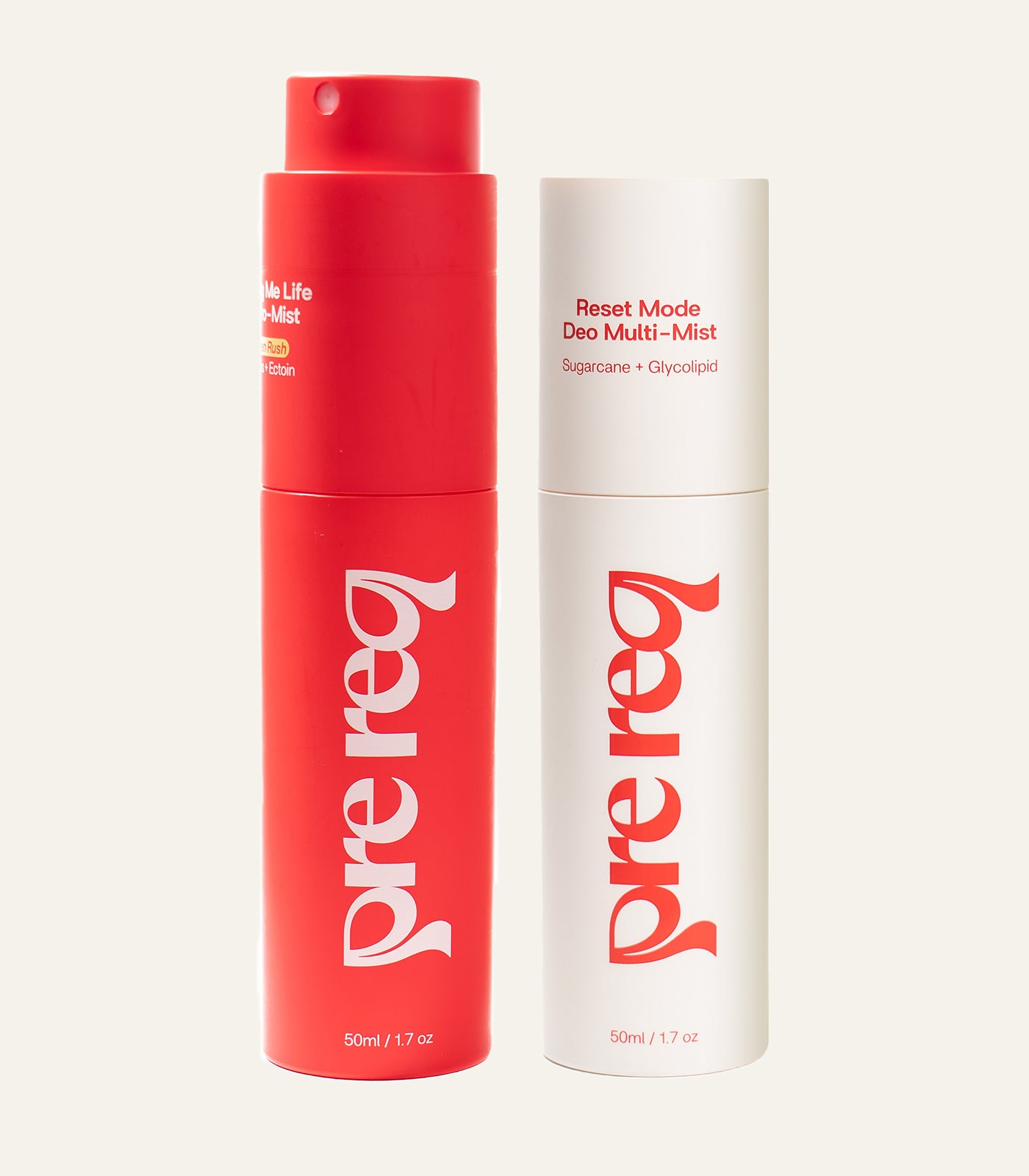
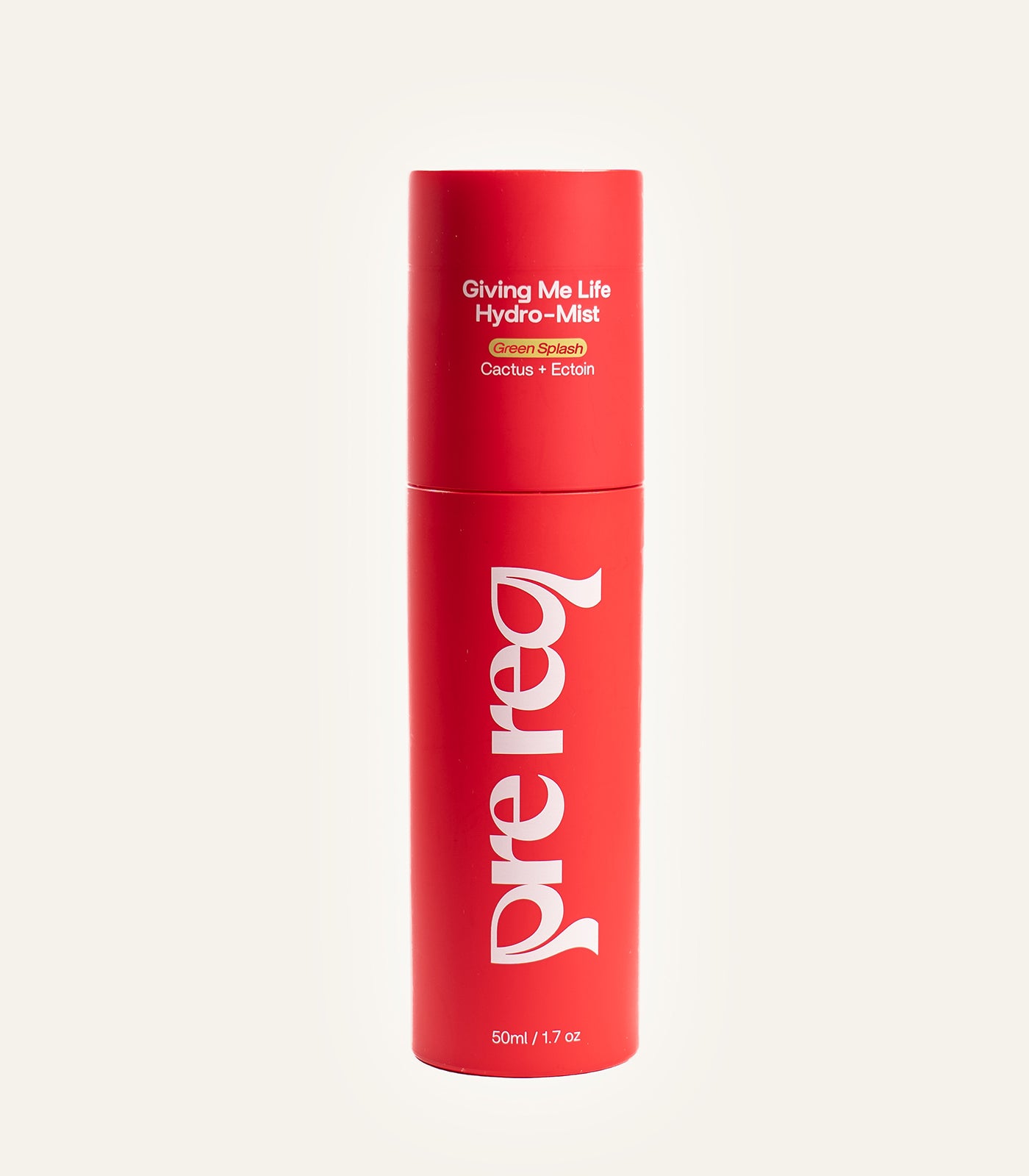
1. Giving Me Life Hydro-Mist - Best Multi-Use Hydrating Mist
Giving Me Life Hydro-Mist is a portable hydrating mist built specifically for pre-teen and teen skin, not a downsized adult product. It uses Ectoin to shield skin from pollution, UV, and blue light from screens, paired with calming cactus extract (AquaCacteen) for 24-hour hydration and sodium hyaluronate to pull moisture in without clogging pores.
Why it's great: Free from acids, retinol, alcohol, and synthetic fragrance, and safe for sensitive and acne-prone skin. Works on face and body, fits in a backpack, and is the kind of product that actually gets used daily.
Key ingredients: Ectoin, AquaCacteen (cactus extract), sodium hyaluronate.
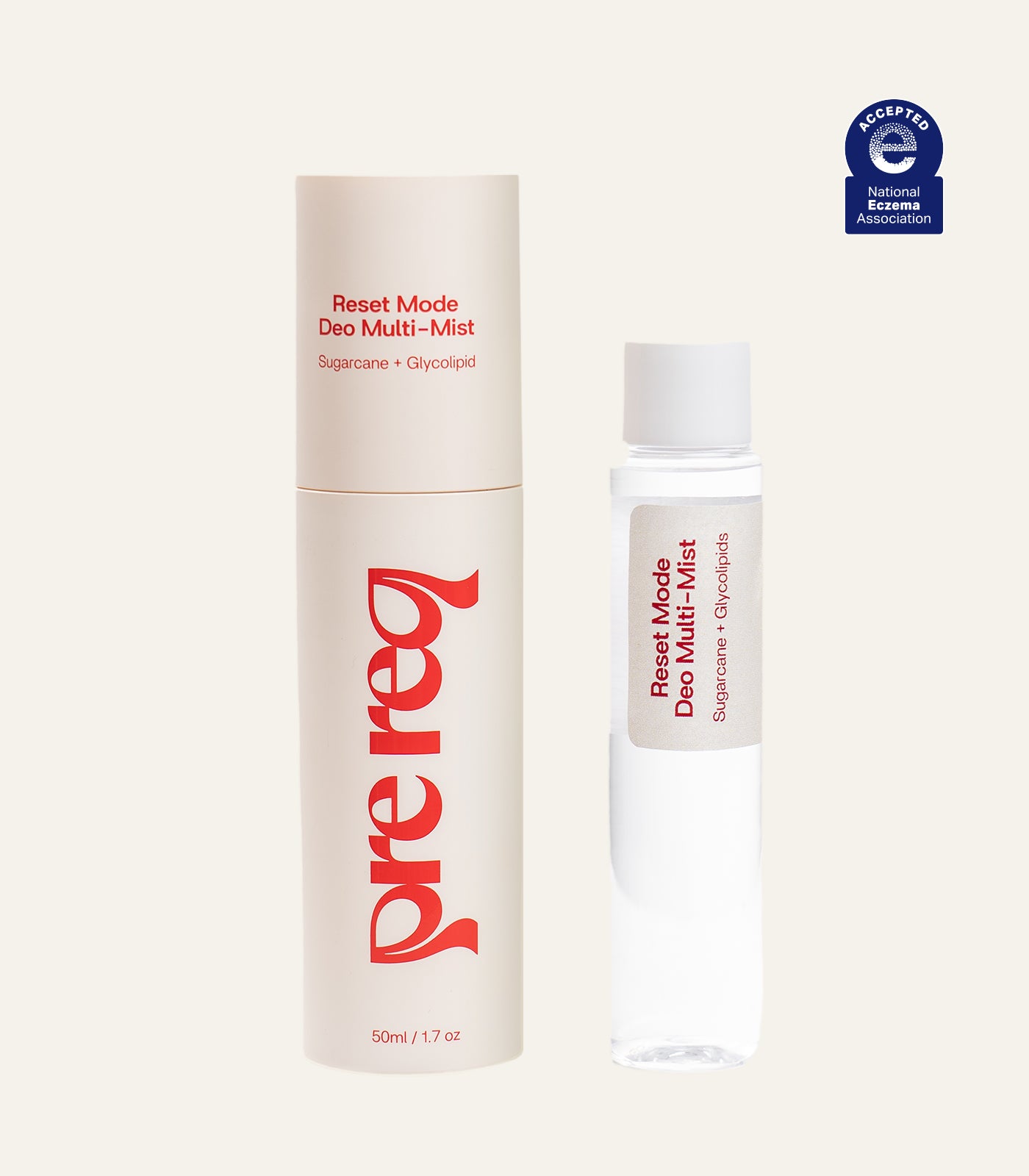
2. Reset Mode Deo Multi-Mist - Best for Body Odor Without Harsh Chemicals
Most "best skincare products for teens" lists skip deodorant entirely, but body odor is one of the first and most noticeable changes of puberty. Reset Mode Deo Multi-Mist is built to handle it without the ingredients that make most adult deodorants unsuitable for young skin.
Why it's great: Aluminum-free and baking-soda-free, using sugarcane fermentation (DeoPlex) to neutralize odor-causing bacteria by up to 60% instead of masking it with fragrance. Carries the NEA Seal of Acceptance for sensitive and eczema-prone skin.
Key ingredients: Saccharomyces ferment filtrate (sugarcane), glycolipids.
3. CeraVe Hydrating Facial Cleanser - Best for Dry or Normal Skin
CeraVe Hydrating Facial Cleanser is a widely recommended drugstore option for teens with normal to dry skin. It's fragrance-free, non-foaming, and gentle enough for once- or twice-daily use without stripping natural oils.
Why it's great: Removes dirt and oil without disrupting the skin's moisture barrier, an important distinction for teen skin that's still developing.
Key ingredients: Ceramides and hyaluronic acid.
4. Hero Cosmetics Mighty Patch (Original) - Best for Spot-Treating Breakouts
Hydrocolloid pimple patches are a genuinely useful tool for teens dealing with the occasional breakout. Hero Cosmetics' Mighty Patch absorbs fluid from a blemish overnight and flattens it without the irritation that comes with picking or popping.
Why it's great: It treats the breakout passively and, just as importantly, gives teens something to do with a pimple besides touching it, which is one of the most common causes of scarring and prolonged healing. Best suited to older teens dealing with isolated, surface-level blemishes rather than as a routine staple for younger tweens.
Key ingredient: Hydrocolloid.
5. Bright Girl Bright+Block SPF 40 Sheer Mineral Sunscreen - Best Daily Sunscreen
Daily sunscreen is arguably the single most important habit a teen can build, and the one most routines skip. Bright+Block SPF 40, developed by board-certified dermatologist, specifically for young skin, is a sheer mineral formula that protects without the heavy, greasy feel that makes most teens stop using sunscreen within a week.
Why it's great: A true mineral formula built around zinc oxide rather than chemical filters, which makes it the gentler choice for developing skin. It's non-comedogenic, vegan, and designed to disappear on skin without the white cast that turns teens off mineral sunscreen in the first place.
Key ingredients: Zinc oxide (UV protection), glycerin (hydration), bioflavonoids (antioxidant, anti-inflammatory).
Recommended Products for Tweens & Teens
Support healthy hygiene and skincare habits with gentle, age-appropriate essentials designed for pre-teens and teens.
Skincare Ingredients to Look For (and Avoid) in Teen Products
|
Look for |
Why it helps |
|
Niacinamide (Vitamin B3) |
Reduces redness, regulates oil, minimizes the look of pores |
|
Ceramides |
Repair and strengthen the skin barrier |
|
Hyaluronic acid |
Hydrates without clogging pores, works for all skin types |
|
Zinc oxide |
Mineral UV protection that sits on the skin's surface |
|
Aloe vera |
Calms irritation and redness |
|
Avoid |
Why it's a problem at this age |
|
Retinol/retinoids |
Too aggressive for a developing skin barrier |
|
Glycolic or lactic acid (AHAs) |
Thins the barrier; unnecessary for teen skin |
|
Benzoyl peroxide |
Very drying; can disrupt a still-developing barrier |
|
Synthetic fragrance |
Common irritant and a frequent cause of contact dermatitis |
|
Parabens |
Preservatives with ongoing questions around hormonal disruption |
One more label to watch for: anything marketed as anti-aging, firming, brightening, or wrinkle-reducing. These claims signal that a product was formulated for adult skin concerns, like fine lines or hyperpigmentation, that teen skin simply doesn't have yet. A product labeled this way isn't necessarily harmful, but it's solving a problem your teen's skin doesn't have, often by including actives their skin doesn't need.
How Often Should Teens Use These Products?
A simple way to think about frequency: cleanser once daily in the evening (twice daily only if skin is consistently oily), a hydrating moisturizer or mist morning and night, mineral SPF every morning, an HOCl spot spray as needed for breakouts, and deodorant once daily after showering. That's five products covering five jobs, with nothing layered on top of anything else.
This is also where layering order matters. Apply lightest, water-based products first (a hydrating mist), then anything thicker, then sunscreen last in the morning routine, since SPF needs to sit on top to do its job. Spot treatments go on clean, dry skin before moisturizer in the evening.
Recommended Skincare for Teens
As children grow into their tween and teen years, good hygiene goes beyond choosing the right deodorant. Recommended skincare for teens includes a simple daily routine that keeps skin clean, hydrated, and comfortable without using harsh products. A gentle cleanser, a lightweight moisturizer, and sunscreen during the day are often enough for healthy skin. If body odor has started, pairing these skincare basics with a gentle, aluminum-free deodorant can help teens feel fresh and confident throughout the day. Brands like PreReq Care focus on simple, age-appropriate products that support both healthy skin and everyday hygiene, making it easier for teens to build good habits that last.
Frequently Asked Questions
What is the 4-2-4 rule in skincare?
The 4-2-4 rule means waiting 4 days to judge a new product, 2 weeks to assess real results, and 4 weeks before deciding if a routine works. For tweens and younger teens, a simpler standard works just as well: stick to a basic three-step routine and judge it over several weeks.
What is the safest skincare brand for teens?
There's no single "safest" brand, but safe products for teens share the same traits: fragrance-free, non-comedogenic, no retinol or harsh acids, and third-party verification like the NEA Seal of Acceptance. Brands formulated specifically for teen skin are a safer starting point than adult lines marketed downward.
What skincare should my 12-year-old use?
The same three-step foundation as a younger tween: a fragrance-free cleanser at night, a lightweight moisturizer morning and night, and a mineral SPF 30 every morning. A gentle HOCl spot spray can be added for frequent breakouts, but retinol and benzoyl peroxide should still wait.
Do teens need a separate skincare routine from adults?
Yes. Teen skin has a different oil balance, a thinner barrier, and higher sensitivity than adult skin. Adult products formulated for anti-aging or high-strength acne treatment can disrupt a teen's skin barrier rather than help it.
What happens if you use expired skincare products?
Expired products lose effectiveness as their preservatives break down, making them more likely to harbor bacteria, especially water-based mists and cleansers. Check the PAO symbol on packaging, and replace anything that's changed in smell, color, or texture.
Building the Routine
The best skincare products for teens aren't the trendiest or the most expensive; they're the ones built for skin that's still figuring itself out. A gentle cleanser, a hydrating mist, daily mineral SPF, a gentle spot treatment for breakouts, and a deodorant free from aluminum and harsh chemicals cover everything most teens actually need. For a full breakdown of how these pieces fit together day to day, see the complete beginner tween skincare routine, and for a deeper look at what ingredients to avoid and why, visit Self Care 101.
Ready to start? Shop the full Prereq collection.

